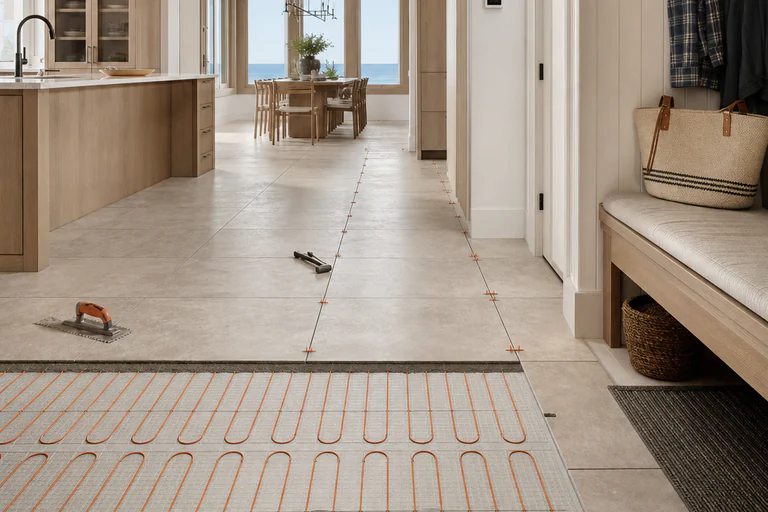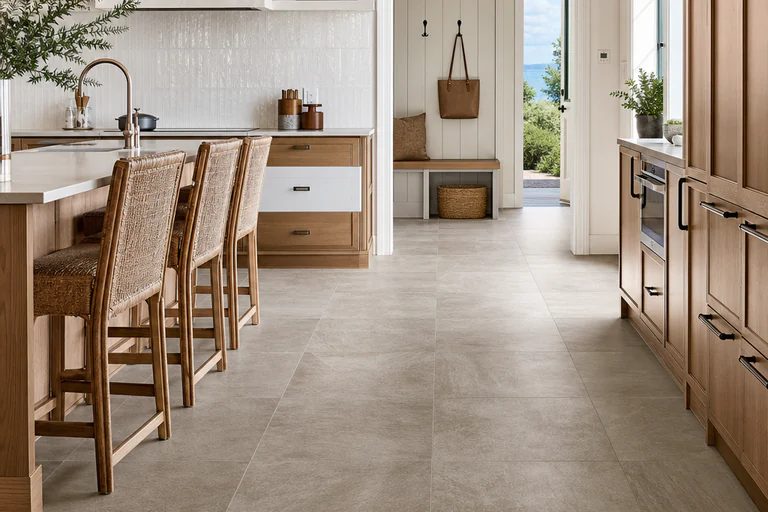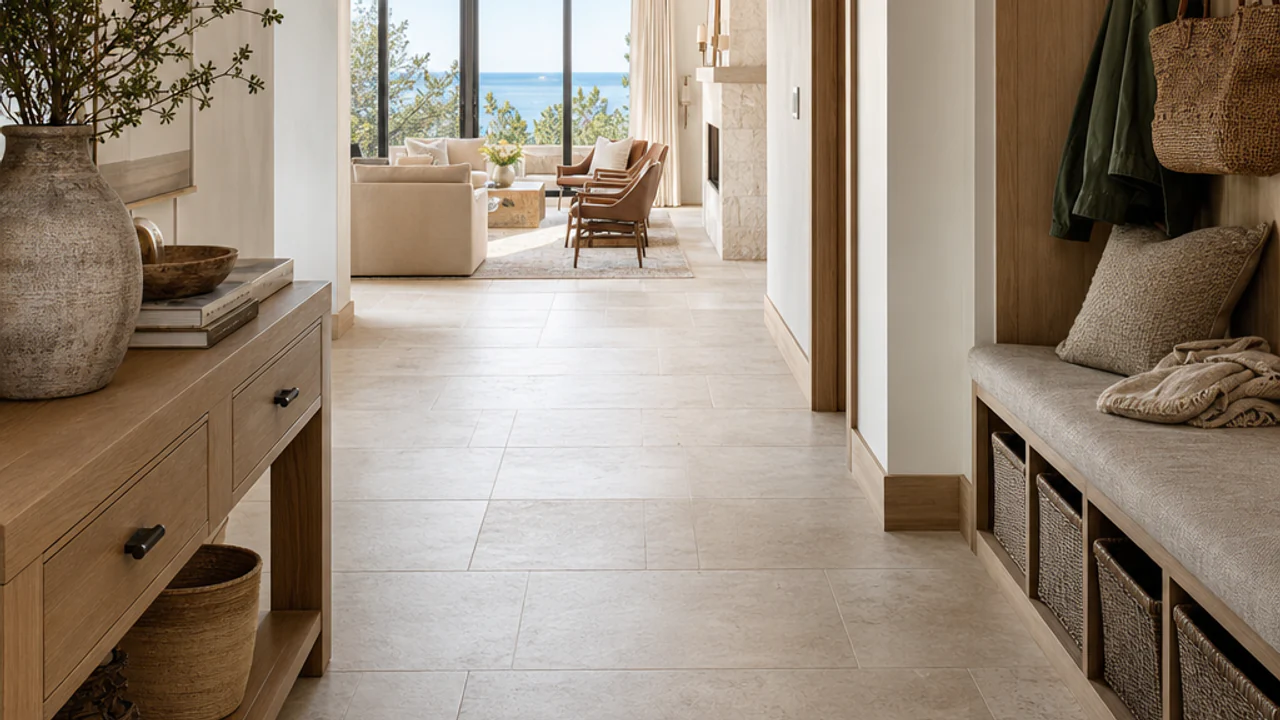

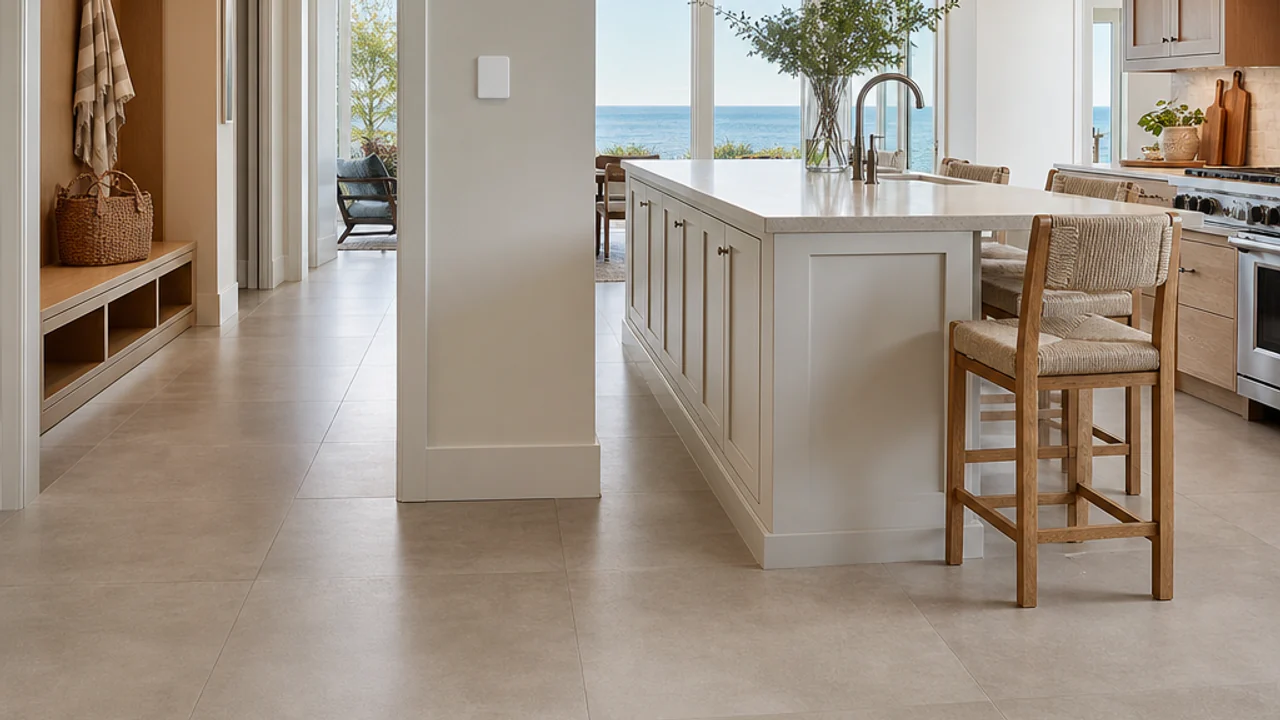
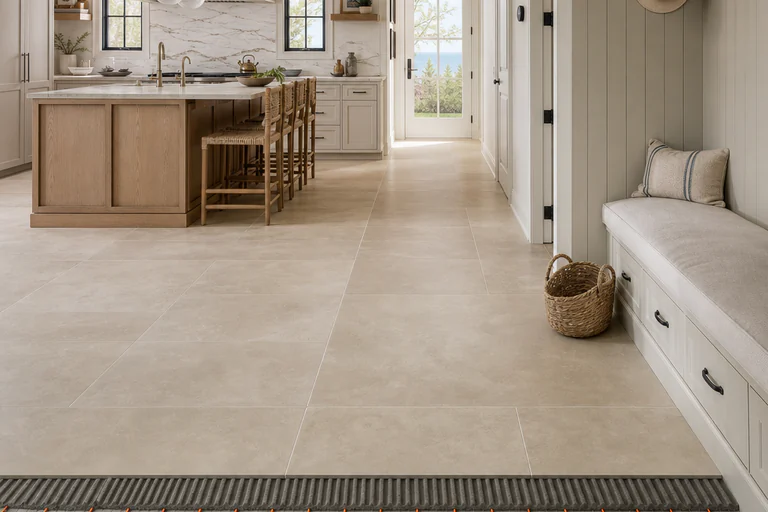
Large-format porcelain tile floor in a kitchen and adjoining mudroom with a slim thermostat plate on the wall

Radiant Heated Tile Floors in Grand Rapids, MI

Tile is the best-matched floor covering for in-floor heat — it conducts warmth efficiently and tolerates the temperature cycling that softer flooring struggles with. Grand Rapids Masonry & Restoration sets tile over radiant systems in West Michigan homes.

✓ Serving Greater Grand Rapids
✓ Free Estimates
✓ Historic Preservation Specialists

A heated tile floor is the difference between a mudroom you hurry across and one you don't mind standing in. Because the work is entirely indoors, it is one of the few flooring upgrades that can be scheduled in the middle of a Michigan winter. Get a free estimate to talk through your project.

Small indoor projects welcome

A practical fit for winter

Compact heated bathroom, entryway, and mudroom floors are welcome. We set tile over radiant systems and coordinate the tile assembly around the separate heating-trade scope.

How Do Heated Tile Floors Work in a Michigan Home?

A heated tile floor is two systems working together: a radiant heat element installed over the subfloor, and a tile assembly set on top of it. In most residential retrofits the element is an electric mat or cable run in the mortar bed, controlled by its own thermostat and zoned to a single room. Tile is the natural surface for it because tile conducts heat readily rather than insulating against it — the same property that makes a tile floor feel cold in an unheated room is what makes it feel warm quickly once heat is running underneath.

The distinction worth understanding before you plan a project is that radiant heat and tile setting are two different scopes of work. We set tile over radiant systems and coordinate the tile assembly around them: confirming the element layout before setting begins, selecting mortar and membrane rated for temperature cycling, and protecting the element through the installation. The heating system itself — its electrical supply, thermostat, and any connection to a hydronic loop — is a separate trade scope. During the estimate we confirm which parts of the project we are handling and which need an electrician or mechanical contractor, so nothing falls between the two.

Temperature cycling is the variable that separates a heated floor that lasts from one that fails. A floor that warms and cools daily expands and contracts more than an unheated floor, and the tile assembly has to accommodate that movement. That means setting materials rated for the application, movement accommodation at the perimeter and at any large expanse of field tile, and grout that can tolerate the cycling. Installations that ignore the movement question tend to announce the problem later as cracked grout lines or tiles that have released from the substrate.

In Grand Rapids homes, the rooms that most often justify the work are bathrooms where a warm floor adds daily comfort, along with mudrooms and entryways over slabs or crawlspaces, kitchens above uninsulated basements, and back halls running along exterior walls. These are also rooms where tile is already the sensible surface, which is why the two decisions are so often made together.
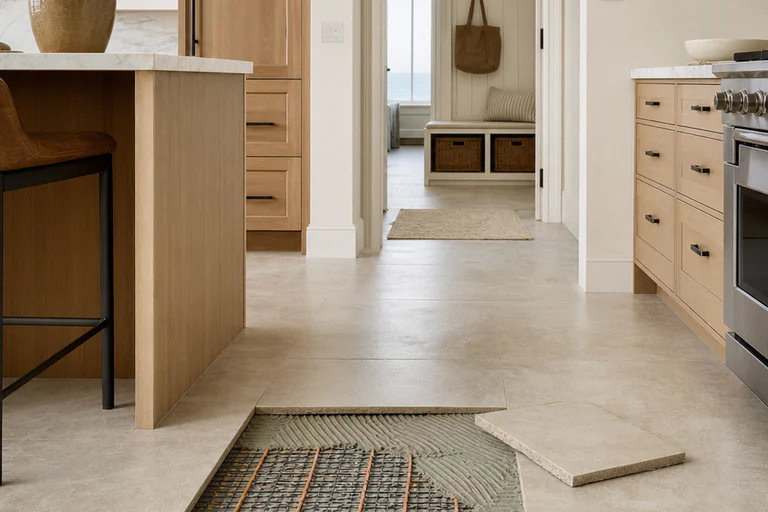
Porcelain floor tile meeting painted baseboard and a wood door casing with a concealed perimeter gap

A heated floor moves as it warms and cools, so the perimeter gap behind the baseboard and the soft joint at a change of plane are what let that movement happen without cracking anything.

Heated Floor Problems We Address

Heated tile floor with a cracked grout joint running through several courses and a hollow-sounding tile

Grout that opens along a continuous line on a floor that warms and cools daily usually points to missing movement accommodation rather than to the grout itself.

  • ✓Cold floors over unheated space — slabs, crawlspaces, and uninsulated basements that leave the floor above them uncomfortable all winter
  • ✓Cracked grout over an existing heated floor — a common symptom of an assembly that could not accommodate temperature cycling
  • ✓Tile released from the substrate — setting materials that were not rated for a heated application
  • ✓Uncoordinated retrofits — heat elements installed without the tile assembly planned around them, leaving thickness or layout conflicts at doorways

Our Heated Tile Floor Process

Heated floor installation with uncoupling membrane, electric heating cable, thinset, reference lines, level, and trowels

The heating element is embedded in the mortar bed over an uncoupling layer, so the element layout, the coverage of the setting bed, and the reference lines all have to be settled before the first tile goes down.

1

Scope & Coordination Review

We confirm what the project includes before anything is ordered — whether the radiant element is already specified, who is handling the electrical and thermostat work, and how the finished floor height affects doorways, thresholds, and appliance clearances.

2

Subfloor Preparation

The subfloor is assessed for flatness and stiffness and prepared for both the heat element and the tile above it. A floor that flexes will crack grout regardless of what is heating it, so any deflection or unevenness is corrected before the element goes down.

3

Element Protection & Layout

The heat element layout is confirmed and dry-fitted against the planned tile layout so cuts, transitions, and any fixture penetrations avoid the element. We protect the element throughout the setting process and coordinate the schedule so the installing electrician can test and verify element continuity before we cover it.

4

Setting & Movement Accommodation

Tile is set in mortar rated for temperature cycling, with full coverage under the tile so there are no voids over the element. Movement is accommodated at the perimeter and within large tiled areas so daily expansion and contraction does not concentrate in the grout.

5

Grouting & Cure Handoff

Joints are grouted once the setting mortar has cured. We then hand off the cure schedule to whoever is commissioning the heating system, because a new assembly brought to full heat before it has finished curing is a common way to crack an otherwise sound floor — the system should come up to temperature gradually, after curing is complete.

Benefits of Professional Radiant Heated Tile Floors

✓Tile conducts and radiates heat efficiently, so a heated tile floor warms a room faster than heated flooring made of more insulating materials
✓Mudrooms and entryways dry tracked-in snow and salt faster when the floor beneath them is warm
✓Zoned room-by-room control means you heat the rooms with cold floors without touching the rest of the house
✓An assembly built for temperature cycling avoids the cracked grout and released tile that follow retrofits done without movement accommodation
✓The work is entirely indoors, so it can be scheduled through a Michigan winter rather than waiting for the spring exterior season
Completed porcelain floor over in-floor heat with a flat plane and consistent narrow grout joints

A heated floor that lasts looks unremarkable: a flat plane, full mortar coverage under every tile, restrained joints, and somewhere for the daily expansion to go.

Tile Installation by City in West Michigan

We serve homeowners throughout the Grand Rapids metro area and West Michigan. Select your city for local tile installation information.

Request Your Free Radiant Heated Tile Floors Estimate

Tell us about your project and we'll schedule a free on-site assessment. No obligation — just honest guidance from local masonry specialists.

Tell Us About Your Project

Tell us about the tile job

Have photos? Mention that in your message. We can arrange a secure way to share them after we respond.

By submitting this form, you agree to our Terms and Conditions and Privacy Policy.

Frequently Asked Questions

How do heated tile floors work in a Michigan home?▼

A radiant element — usually an electric mat or cable in a residential retrofit — is installed over the prepared subfloor and set into the mortar bed, with tile going down on top of it and a dedicated thermostat controlling the room. Tile is the natural surface because it conducts heat rather than insulating against it. Common Grand Rapids applications include bathroom floors, mudrooms and entryways, kitchens above uninsulated basements, and back halls running along exterior walls.

Do you install the radiant heating system itself?▼

Radiant heat is a separate scope from tile setting. We set tile over radiant systems and coordinate the tile assembly around them — confirming element layout, selecting setting materials rated for temperature cycling, and protecting the element through installation. The heating system's electrical supply, thermostat, and any hydronic connection belong to an electrician or mechanical contractor. We confirm during the estimate which parts of the project we are handling and which need another trade, so the two scopes are planned together rather than discovered mid-project.

Can a heated tile floor be added to an existing room?▼

Usually yes, provided the finished floor height works. Adding an element and a tile assembly over an existing subfloor raises the floor, which affects door clearances, thresholds to adjoining rooms, and appliance fit in kitchens. That height question is the first thing we check during the estimate, because it is far cheaper to plan around than to discover after demolition. Rooms where the existing floor is already being torn out are the most straightforward retrofits.

Why does grout crack on heated floors?▼

Because a heated floor expands and contracts daily as it cycles, and that movement has to go somewhere. If the assembly was built without movement accommodation at the perimeter and within large tiled areas, the movement concentrates in the grout joints and cracks them. The other common causes are setting materials that were not rated for a heated application and voids under the tile where the mortar did not achieve full coverage. All three are installation decisions, not inherent problems with heated floors.

Can heated tile floors be installed during winter?▼

Yes. This is indoor work in a heated building, so outdoor temperatures do not affect it. Winter is often the practical time to schedule it — crews have more availability before spring exterior masonry demand picks up, and a cold floor is when homeowners most notice the problem. We schedule around cure times for the setting mortar and grout, and bring the system up to temperature gradually once the assembly has cured.

What tile works best over radiant heat?▼

Porcelain and ceramic are the usual choices because they are dimensionally stable and conduct heat well. Natural stone also works and holds heat noticeably longer, though it is heavier and porous types need sealing. The more important variable is not the tile type but the setting system around it — mortar, membrane, and grout all need to suit a heated application, and large-format tile needs a flatter substrate than small tile regardless of whether heat is involved. We confirm compatibility across the whole assembly during planning.

Radiant Heated Tile Floors Service Areas

Serving West Michigan communities with expert radiant heated tile floors services