
What Tile Works Best for Michigan Entryways and Mudrooms?
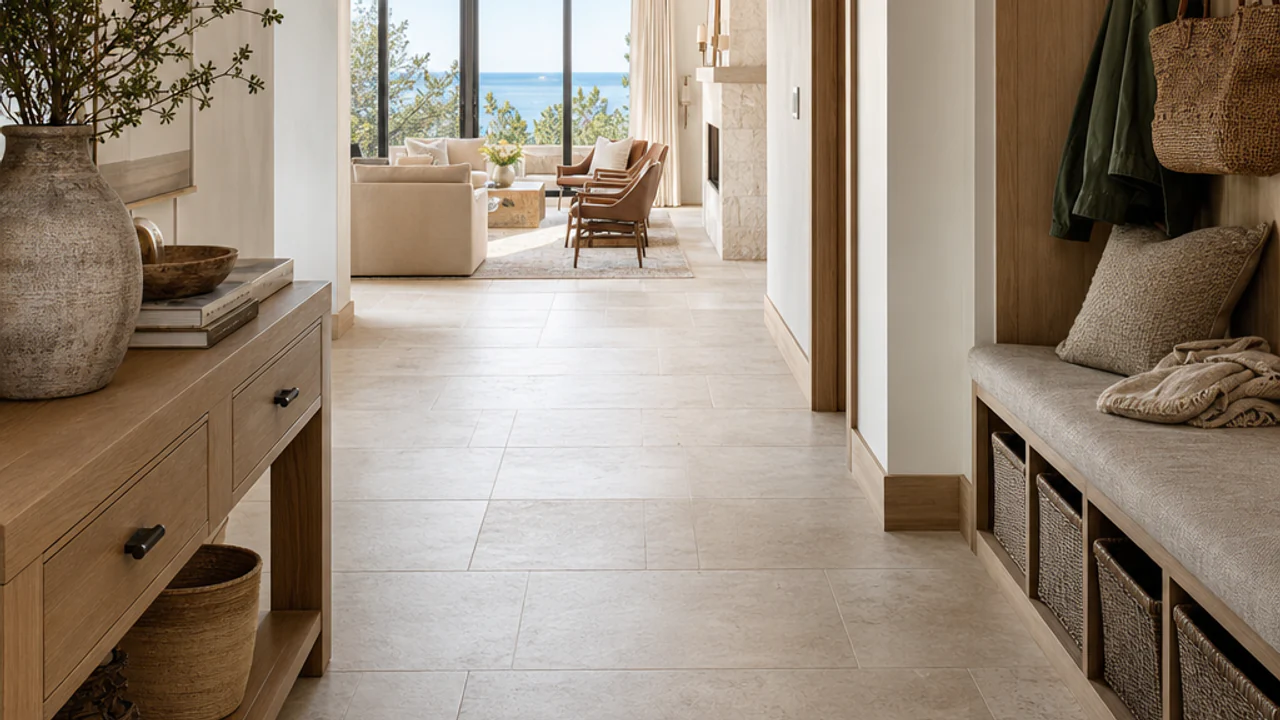
Entryway and mudroom tile needs slip resistance, durability against salt and moisture, and a substrate that handles seasonal tracking without cracked grout or lippage. In West Michigan, the front door zone takes more abuse than almost any other floor in the house.
What tile is best for a Michigan mudroom floor?
Porcelain tile rated for floor use with a matte or textured finish is the best starting point for Michigan mudroom floors. It resists moisture absorption, handles road salt and grit, and cleans up with routine mopping when grout is sealed.
Natural stone such as slate can work for homeowners who want an organic look — cleft surfaces often grip better when wet. Whatever material you choose, floor-rated hardness and a flat, stiff substrate matter more than color or pattern alone.
How do you prevent cracked grout in entryways?
Cracked grout in entryways usually traces back to substrate movement or inadequate prep — not the grout brand. The floor must be flat enough for the tile size selected and stiff enough to limit deflection under foot traffic and seasonal load changes.
Uncoupling membranes, proper backer over wood subfloors, and sealed grout joints all reduce stress at the threshold. We assess flatness and structure during the estimate rather than assuming an existing entry floor is ready for large-format tile.
Can heated floor systems work under entryway tile?
Electric radiant heat can work under entryway tile when the system is compatible with the tile assembly and installed according to manufacturer requirements. Tile conducts heat well, which can make a mudroom more comfortable in winter and help dry tracked-in moisture faster.
Radiant heat is a separate scope from tile setting — compatibility with mortar, membrane, and tile type must be confirmed during planning. See our heated tile floors page for how we set tile over in-floor heat, or discuss whether your project includes heat coordination during the estimate.
What transition details matter at the front door?
Transitions at the front door need supported tile edges, flush thresholds where possible, and movement allowances at perimeters. A trip edge or binding transition is a daily annoyance in the highest-traffic path in the home.
Metal profiles, flush wood transitions, and proper perimeter gaps concealed by trim all protect the installation while keeping the entry comfortable underfoot. Lakefront and river-corridor homes near Spring Lake and Grand Haven see extra moisture at entries — transitions and sealed grout matter even more.
When should entryway tile be replaced vs repaired?
Replace entryway tile when multiple units are loose, grout is failing across the field, or the substrate is no longer flat or sound. Localized cracked tiles with stable surrounding work can sometimes be addressed with targeted replacement if matching tile is available.
Worn but bonded tile with only cosmetic grout staining may be a maintenance decision rather than full replacement. We give an honest recommendation after looking at bond, flatness, and how much of the floor is compromised.
West Michigan winters mean boots, salt, and meltwater at the door every day — the right tile floor installation with proper prep outlasts shortcuts that look fine until the first hard freeze cycle.
Not sure whether your project is a new floor, a repair, or a replacement? Start with our small tile jobs selector, or request an estimate for entryway or mudroom tile in Grand Rapids, Spring Lake, Holland, and surrounding communities.
Frequently Asked Questions
Is porcelain tile good for snow and salt exposure?
Yes — porcelain is dense and low-absorption, so tracked-in melt and salt clean off without soaking into the tile body. Sealed grout and routine cleaning still matter; the tile itself handles entry exposure better than porous materials.
Do mudroom tile floors need sealing?
Grout in floor applications benefits from sealer after installation and periodic re-sealing over time. Some porcelain tile needs little or no sealing; porous stone may need tile sealer as well. We recommend maintenance based on the materials selected.
How does tile compare to LVP in entryways?
Luxury vinyl can handle moisture and is warmer underfoot, but sharp grit and heavy loads can damage it over time. Tile is harder, easier to clean completely, and typically lasts longer in a true mudroom when installed over a proper substrate.
What size tile works best in a small entryway?
Large-format porcelain can make small entries feel more open with fewer grout lines, but the subfloor must be flatter. Smaller tile can forgive minor substrate variation but adds joints to maintain. Layout planning during the estimate resolves which approach fits your space.
Need Professional Help?
If you've identified masonry issues or need a professional inspection, Grand Rapids Masonry & Restoration is here to help. We serve the Grand Rapids metro area and surrounding communities.
Related Articles
Why Is Winter the Best Time for Tile Projects in Michigan?
Yes — indoor tile in kitchens, entryways, mudrooms, and backsplashes can be scheduled through Michigan winters. Learn why winter timing often works better for West Michigan homeowners.
What Are the Best Indoor Tile Projects for Michigan Winters?
Kitchen floors, entryways, mudrooms, backsplashes, and fireplace hearth tile are the strongest winter tile projects because they are indoor, climate-controlled work in West Michigan homes.
How Does Kitchen Tile Floor Installation Work in Grand Rapids Homes?
Kitchen tile floor installation starts with subfloor assessment — flatness, stiffness, and moisture — before tile is selected or set. Here is how the process works in Grand Rapids homes.
Tile Services in Greater Grand Rapids
Grand Rapids Masonry & Restoration handles indoor tile work year-round — showers, floors, backsplashes, repair, and replacement across the Grand Rapids metro.
View all tile contractor services →