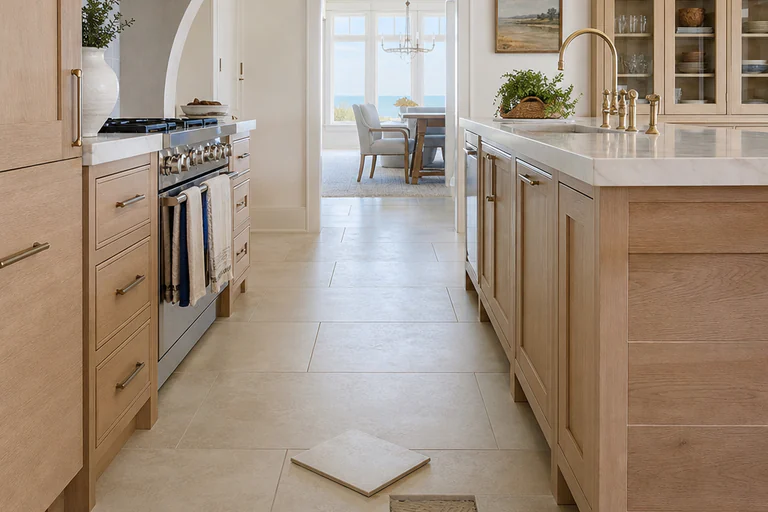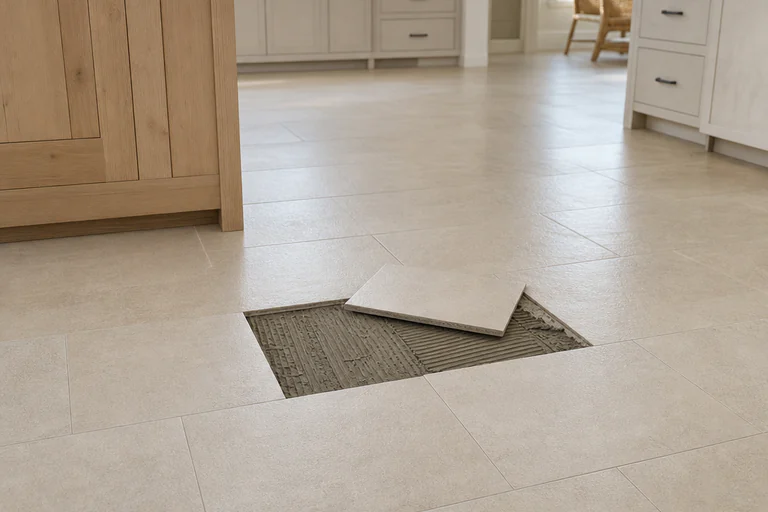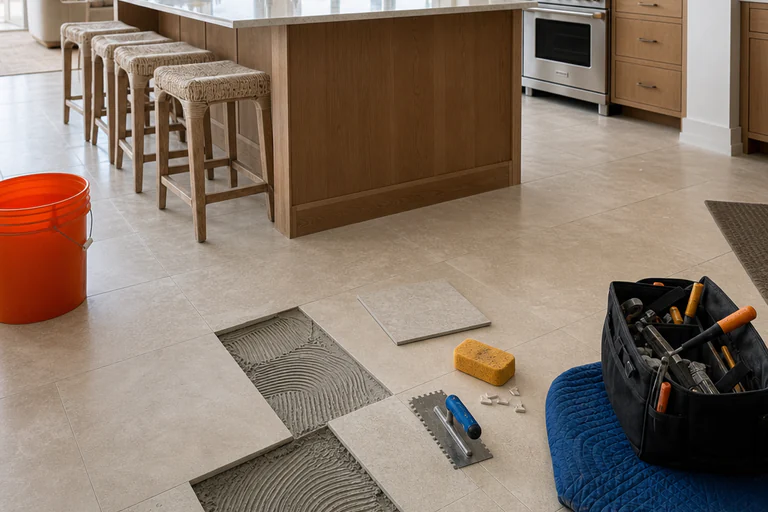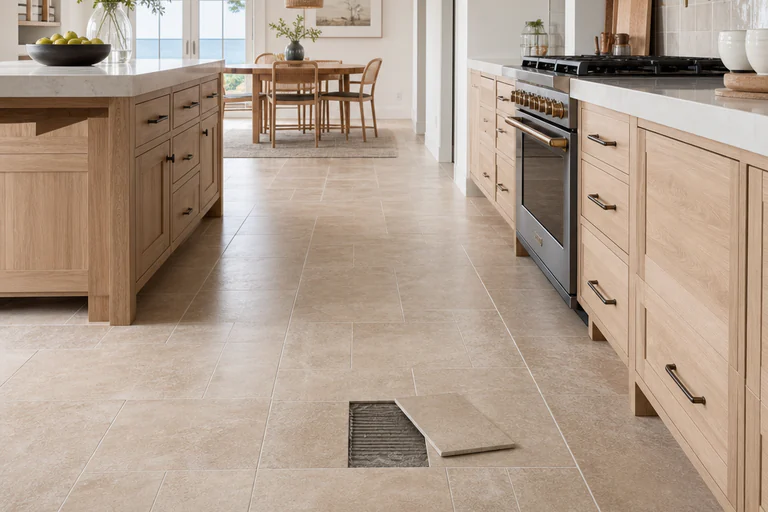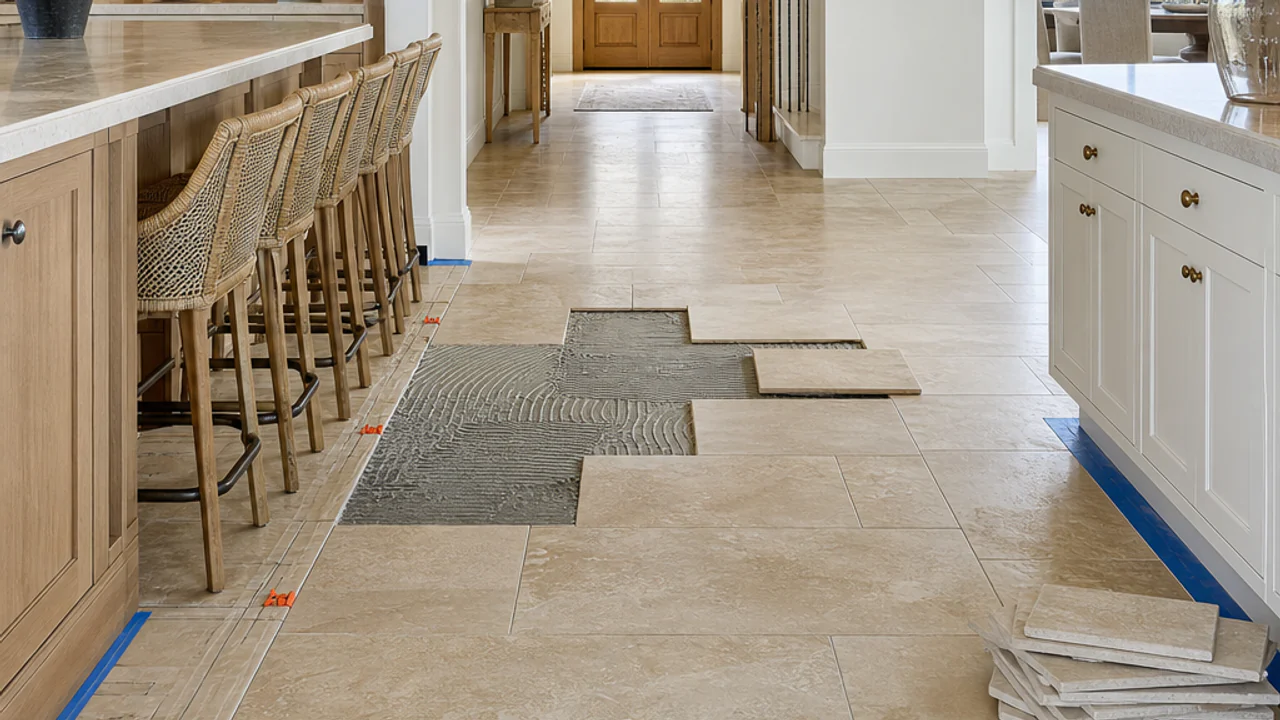

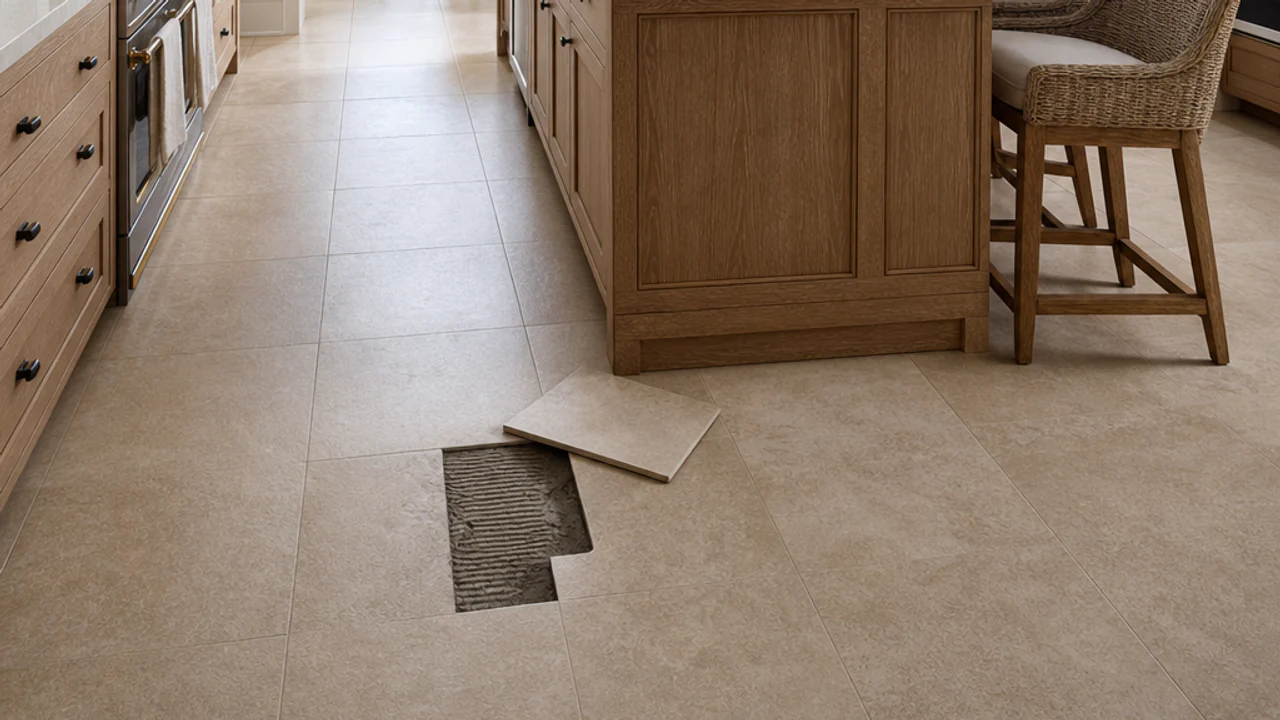
Tile repair is the work that fixes a tile surface while leaving it in place. When homeowners search for tile restoration near me, this is usually the service they mean: preserving the sound tile, replacing damaged units, resetting loose pieces, and renewing failed grout rather than demolishing the whole surface. That covers cracked, chipped, and broken tile replaced unit by unit; tile that has released from the substrate and needs resetting; grout repair where joints have opened or crumbled; regrouting a sound field that has simply worn out; and replacing rigid grout with flexible sealant at the corners and perimeters where grout never belonged. Grout repair and regrouting are part of tile repair, not a separate trade — but they are the smaller half of it, and treating every tile problem as a grout problem is how the same joint ends up repaired three times.
The right call depends on what failed and how widely. A single cracked tile in an otherwise sound floor is a targeted repair. One or two open grout joints is a repair. But loose tile across a whole area, grout failing throughout the field, or a floor that flexes underfoot are not grout problems — they are substrate problems that happen to show up in the grout, and regrouting them buys a few months at most before the same joints open again. When the failure is that widespread, the honest recommendation is a full tile replacement: tearing out the old surface, correcting what is underneath, and setting new tile.
This is where an honest assessment saves money rather than spending it. We have seen homeowners regrout the same backsplash three times because nobody looked at why the tiles were moving. Grout is a filler between tiles; it is not what holds them down. When grout keeps cracking in the same place, the useful question is what is moving underneath it — a subfloor with too much deflection, a substrate that was never flat, setting mortar that never achieved full coverage, or a missing movement joint that left the assembly nowhere to expand.
Where a repair is the right call, matching becomes the constraint. Grout color can be matched closely but rarely perfectly, because existing grout has aged, absorbed traffic, and often been sealed. Replacement tile depends on whether the original line is still available or whether spares were kept — one of the reasons we recommend keeping a box of leftover tile after any installation. For a visible field, a well-placed repair in slightly off-color grout usually reads better than tearing out otherwise sound tile, but it is a judgment call and we will tell you which way we would go.
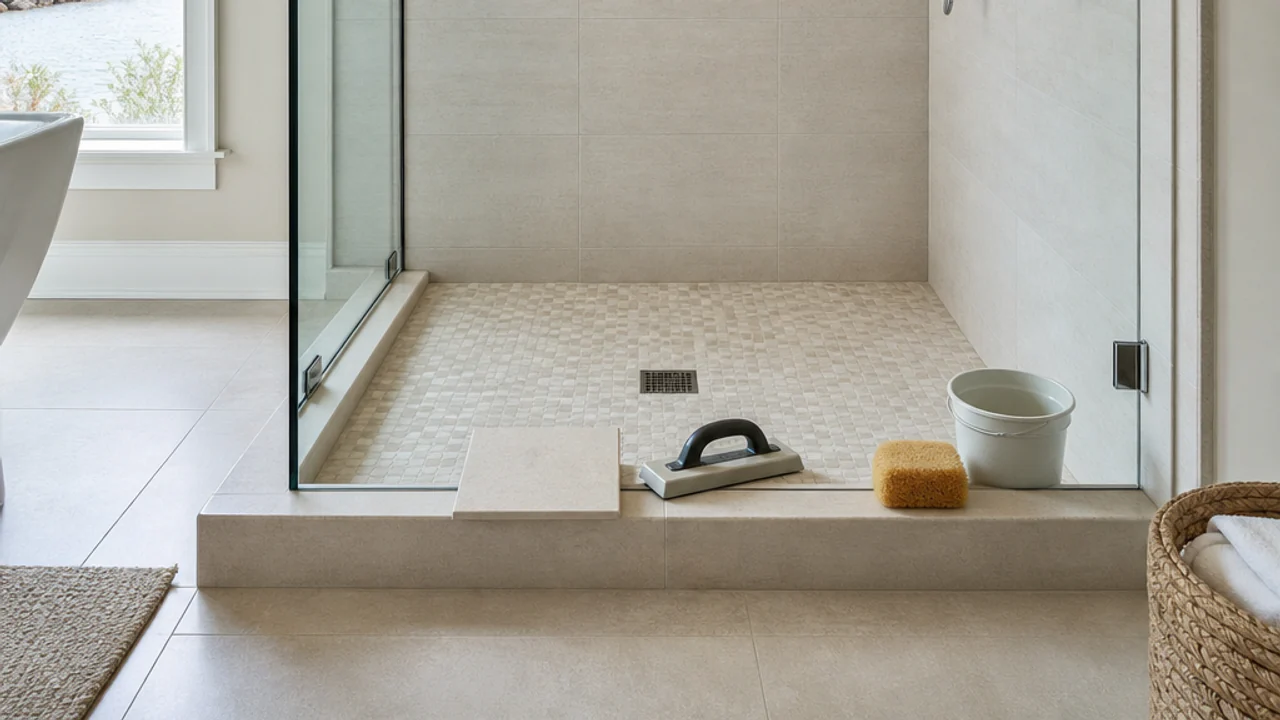
We handle tile repair across the whole range — kitchen floors and backsplashes, entryways and mudrooms, fireplace hearths and surrounds, accent tile in living spaces, and wet areas including showers and tub surrounds. Wet-area repair is a different diagnosis than dry-area repair: when tile fails in a shower, the question is almost always whether the waterproofing behind it is still intact, because a repair set over failed waterproofing will fail again. See shower tile repair for how we approach that.