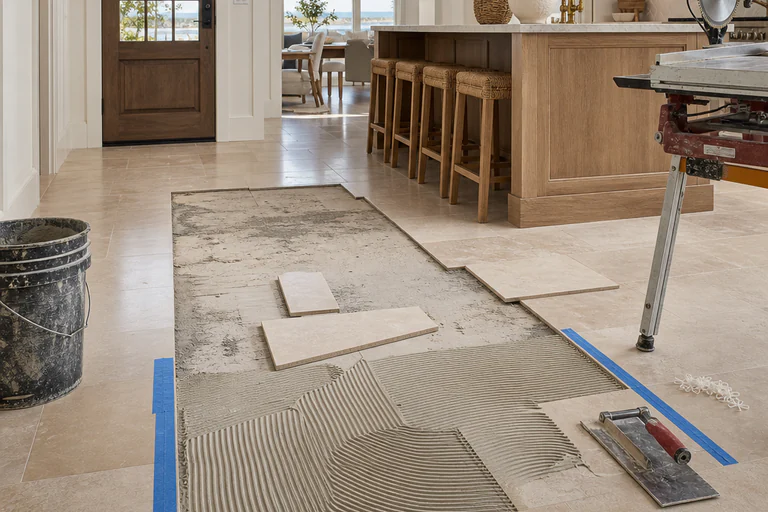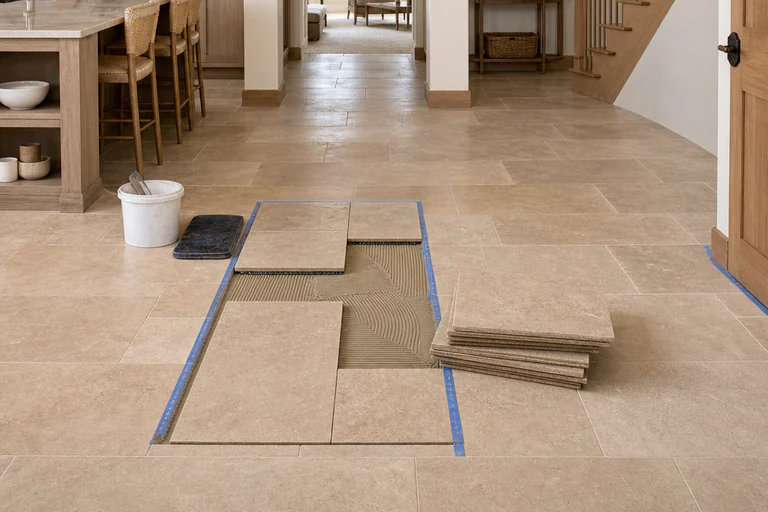

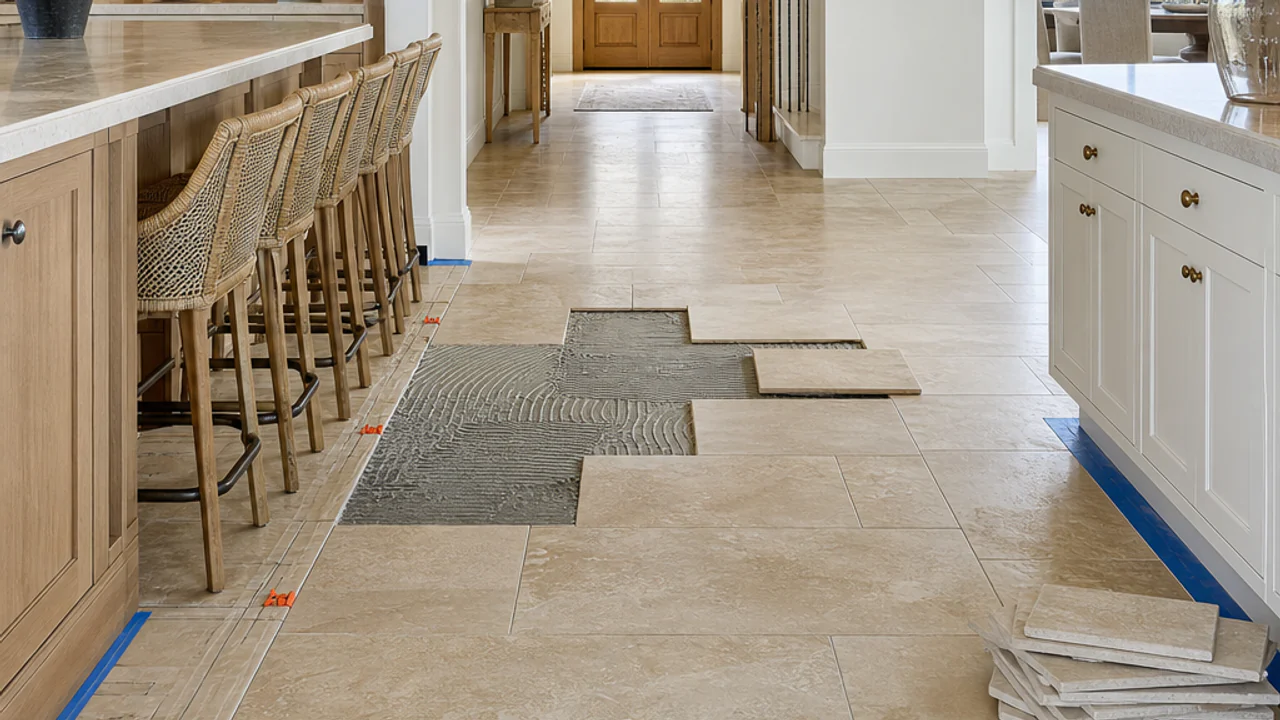
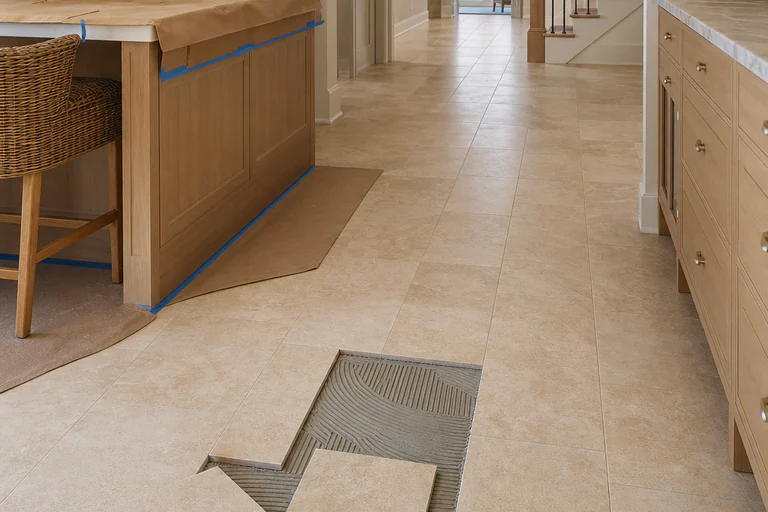
Warm limestone-look porcelain tile floor being selectively replaced in a spacious lakeshore cottage kitchen

Tile Replacement in Grand Rapids, MI

Replacing a tile surface is a different job from installing one on bare substrate. Grand Rapids Masonry & Restoration removes the existing tile, hauls the debris away, fixes what is underneath, and sets the new tile — one crew, one scope, one estimate.

✓ Serving Greater Grand Rapids
✓ Free Estimates
✓ Historic Preservation Specialists

If the tile you have is beyond repair, dated, or failing across the field, replacement means the whole surface comes out and a new one goes in. We do the demolition and the disposal as part of the job rather than leaving you a pile of broken tile in the driveway, and because the work is indoors it can be scheduled through a Michigan winter. Get a free estimate to talk through the project.

Small indoor projects welcome

A practical fit for winter

Limited replacement areas are welcome when existing tile needs to come out before new tile is set. Indoor tear-out and replacement can continue through winter.

What Does a Full Tile Replacement Involve?

A tile replacement is four pieces of work sold as one: removing the existing tile surface, hauling the debris away, assessing and correcting whatever is underneath it, and installing new tile. The removal and the disposal are the parts homeowners are most often left to arrange themselves, and they are the parts that turn a straightforward project into a weekend of loading a trailer. We include both. When the job is finished the old surface is gone, the debris is gone, and the new tile is set on a substrate that has been put right.

Demolition is genuinely the harder half of the work, and it is worth understanding why. Tile that was set correctly does not want to come off — it is bonded to the substrate with mortar, and removing it usually takes the top layer of that substrate with it. Tile set over an older layer of tile, over a mortar bed, or over backer board that was fastened rather than bonded all behave differently under a chisel. Expect noise, dust, and a room that is out of service. We contain the dust, protect the routes the debris travels, and carry it out rather than leaving it stacked.

The substrate is where the project earns its result. Once the old tile is off, the condition underneath is finally visible: a subfloor that flexed more than tile tolerates, a wall that was never flat, adhesive residue and thinset ridges that have to be ground back, fasteners that need re-setting, or water damage that had been quietly progressing behind a failing surface. Setting new tile over any of that reproduces the failure you just paid to remove. We assess what is exposed, show you what we found, and correct it before anything new is set.

Replacement is the right service when the existing surface is coming out. If the surface is staying in place and only parts of it have failed — a cracked tile here, an open grout joint there, a field that is sound but tired — that is tile repair, a smaller and cheaper job. If the surface was never tiled at all, a new backsplash or accent wall is tile setting, and a brand-new floor in a room that did not have tile is tile floor installation. We will tell you plainly which of the four you actually need, including when it is the cheaper one.

We replace tile on kitchen and bathroom floors, entryways and mudrooms, backsplashes and wall tile, and fireplace hearths and surrounds. Wet areas are included, with one qualification worth stating up front: when a shower or tub surround is being torn out, the waterproofing assembly behind the tile comes out with it and has to be rebuilt, not patched. That work is covered on our shower tile installation page, and we will point you there when that is what the project actually is.
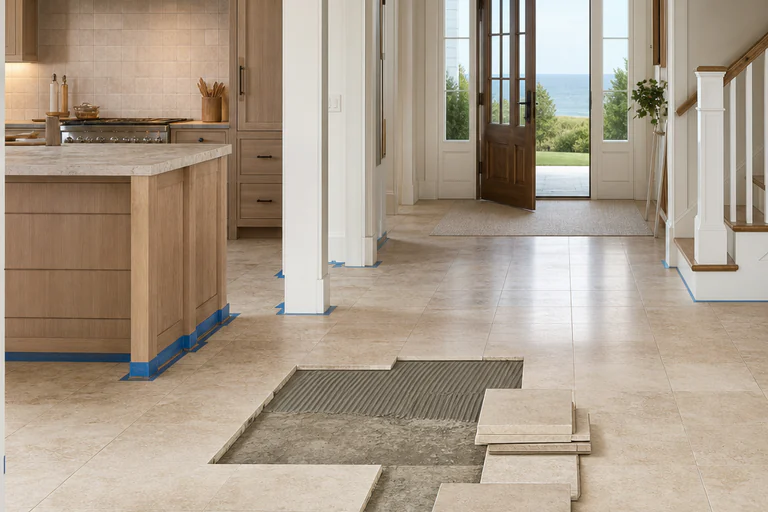
Existing porcelain tile meeting white oak flooring at a flush doorway transition

A replacement plan starts at the edges, where floor height, perimeter movement space, and transitions determine whether new tile can integrate cleanly with the surrounding room.

When Tile Replacement Is the Right Answer

Several cracked and hollow porcelain tiles isolated within an otherwise sound warm-neutral floor

Localized cracks, released units, and recurring grout fractures can support selective replacement when the surrounding assembly remains flat and well bonded.

  • ✓Tile loose across a whole area — a field where enough units have released that resetting them one at a time is no longer sensible
  • ✓A floor that flexes underfoot — movement in the substrate that will crack any new grout set over it until it is corrected
  • ✓Grout failing throughout the field — joints opening everywhere rather than in one or two places, usually a symptom rather than the fault
  • ✓Dated tile that still functions — colors, sizes, and patterns that fix a room in the decade it was last updated
  • ✓Previous tile set over an unresolved problem — an overlay that hid a bad substrate instead of fixing it
  • ✓Repairs that keep reopening — the same joints or the same corner failing again after being repaired before

Our Tile Replacement Process

Tile replacement stage with removed units, cleaned mortar bed, fresh directional thinset, spacers, and matching porcelain tile

Selective replacement removes failed units without damaging their neighbors, cleans the setting bed, and resets matching tile with full support and consistent joints.

1

Assessment & Scope Confirmation

We look at the existing surface, sound the tile, check the floor or wall for movement, and confirm what the replacement includes — the area coming out, where the debris leaves the house, and which adjoining finishes need protecting. This is also where we confirm whether replacement is genuinely the right service or whether a repair would serve you better.

2

Tear-Out & Haul-Away

The existing tile, grout, and any bonded backer or mortar bed are removed. Work areas and travel routes are protected, dust is contained, and the debris is carried out and hauled away as part of the job rather than left on site for you to deal with.

3

Substrate Assessment & Correction

With the old surface off, the substrate is finally visible and gets assessed properly — flatness, stiffness, bond residue, fastening, and any water damage that was hidden behind the failing tile. We show you what is there and explain what it means before correcting it, because this is the stage where a replacement scope can legitimately change.

4

Layout Planning & Setting

The new tile is laid out and dry-fitted so the pattern centers sensibly, cuts fall where they are least conspicuous, and transitions to adjoining floors, thresholds, and trim are resolved deliberately. Tile is then set in mortar appropriate to the tile and the substrate, with full coverage behind each unit.

5

Grouting, Sealing & Finish

Joints are grouted once the setting mortar has cured, with flexible sealant at perimeters and changes of plane instead of rigid grout. Porous tile and sanded grout are sealed where appropriate, transitions and edge profiles are finished, and the space is cleaned before it goes back into service.

Benefits of Professional Tile Replacement

✓Tear-out, disposal, substrate correction, and installation handled as one scope, so there is no gap between trades and no debris left behind
✓The substrate gets assessed and corrected while it is exposed — the one point in the life of a tile surface when that is actually possible
✓Whatever caused the previous surface to fail is addressed rather than covered, so the new tile is not set up to repeat it
✓Dust containment and protected travel routes, because demolition is the messiest part of the job and the part most often done carelessly
✓An honest call on whether replacement is warranted, including when a repair would serve you better and cost less
✓Entirely indoor work, so it can be scheduled through a Michigan winter rather than waiting for the exterior season
Completed warm limestone-look porcelain floor with matched replacement tiles and consistent narrow grout joints

A successful replacement disappears into the existing field through matched material, a flat plane, full support, and joint lines that continue without drifting.

Tile Installation by City in West Michigan

We serve homeowners throughout the Grand Rapids metro area and West Michigan. Select your city for local tile installation information.

Request Your Free Tile Replacement Estimate

Tell us about your project and we'll schedule a free on-site assessment. No obligation — just honest guidance from local masonry specialists.

Tell Us About Your Project

Tell us about the tile job

Have photos? Mention that in your message. We can arrange a secure way to share them after we respond.

By submitting this form, you agree to our Terms and Conditions and Privacy Policy.

Frequently Asked Questions

What does a full tile replacement involve?▼

Four pieces of work sold as one job: removing the existing tile surface, hauling the debris away, assessing and correcting the substrate underneath it, and installing new tile. The removal and the disposal are the parts homeowners are usually left to arrange themselves, and we include both. The substrate stage is the one that determines the result, because it is the only point in the life of a tile surface when what is underneath can actually be seen and put right.

Do you remove and haul away the old tile?▼

Yes, both. Tear-out and disposal are part of the replacement scope, not an add-on you arrange separately. We protect the work area and the route the debris travels, contain the dust, and carry the old tile, grout, and any bonded backer or mortar bed out of the house. You are not left with a pile of broken tile in the driveway or a dumpster to organize.

What is the difference between tile replacement and tile repair?▼

Whether the existing surface stays. Tile repair fixes a surface that remains in place — individual cracked or loose tiles, open grout joints, regrouting a sound field. Tile replacement takes the whole surface out and installs a new one. Repair is the smaller and cheaper job and is the right call when the failure is localized and the surrounding tile is well bonded. Replacement is the right call when tile is loose across an area, the field is failing generally, the substrate moves, or the tile is simply dated.

What happens if the subfloor or wall is damaged under the old tile?▼

We stop, show you, and explain what it means before continuing. Damage underneath is not always visible until the old surface is off, which is why substrate condition is the main unknown on any replacement. Typical findings are a subfloor with more flex than tile tolerates, a wall that was never flat, thinset and adhesive residue that has to be ground back, loose fastening, or water damage that had been progressing behind a failing surface. All of it gets corrected before new tile goes down, because setting over it reproduces the failure.

How disruptive is a tile tear-out?▼

Demolition is the noisy, dusty part of the job and the room is out of service while it happens. Tile that was set correctly is bonded to the substrate and does not come away quietly. We contain dust, protect adjoining finishes and the route the debris travels, and clean as we go, but a tear-out is not a quiet afternoon. We plan the schedule with you around which rooms you can do without, especially in a single-bathroom home.

Can old tile be left in place and tiled over instead of replaced?▼

Sometimes, and we will say so when it is the better option. An overlay depends on the existing tile being firmly bonded, flat, and free of significant cracking, and on the added thickness not creating conflicts at cabinet toe kicks, thresholds, and transitions to adjoining rooms. Where the existing tile is loose, the substrate moves, or the failure is general, an overlay hides the problem rather than resolving it and the new surface inherits it. We assess this during the estimate and give you a straight recommendation either way.

Who does tile replacement near me in Grand Rapids?▼

Grand Rapids Masonry & Restoration replaces tile throughout Greater Grand Rapids and West Michigan, including East Grand Rapids, Grand Haven, Holland, Spring Lake, Caledonia, Allendale, and Hudsonville. We handle kitchen and bathroom floors, entryways and mudrooms, backsplashes and wall tile, and fireplace hearths and surrounds — tear-out, haul-away, substrate correction, and new tile as a single scope. Estimates are free.

Can tile be replaced in the middle of a Michigan winter?▼

Yes. This is interior work in a heated house, so outdoor temperatures do not affect it, and winter is often the practical time to schedule it because crews have more availability before spring exterior masonry demand picks up. The scheduling consideration is cure time rather than weather: setting mortar and grout each need to cure before the next stage, so we plan the sequence with you around how long the room can be out of service.