
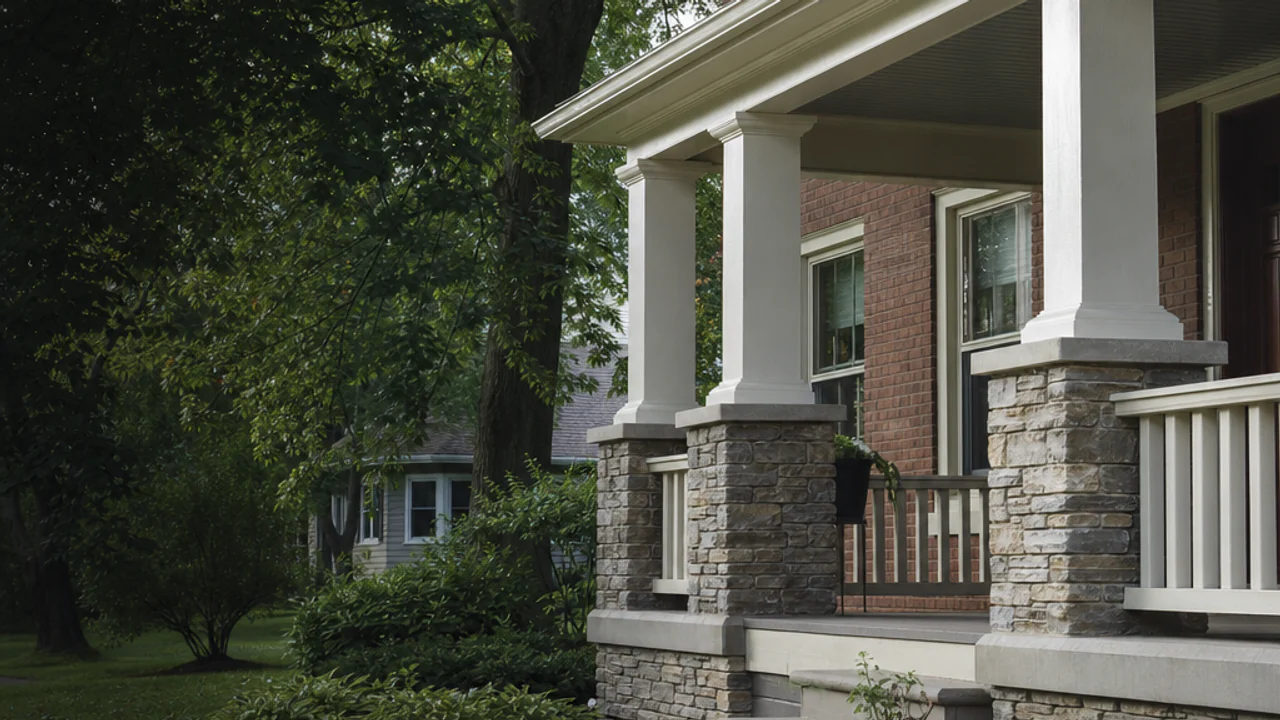
Older brick residence with natural thin-stone veneer wrapping the foundation and porch piers

Stone Veneer Installation in Grand Rapids, MI

Stone veneer transforms exteriors, foundations, fireplaces, and accent walls — and when installed correctly for Michigan's climate, it lasts for decades without maintenance concerns.

✓ Serving Greater Grand Rapids
✓ Free Estimates
✓ Historic Preservation Specialists

Whether you're updating an exterior that's lost its appeal, adding natural stone character to a foundation or fireplace, or creating an accent wall inside, stone veneer is one of the most versatile masonry improvements available. Grand Rapids Masonry & Restoration installs natural and manufactured stone veneer throughout the Grand Rapids area. Get a free estimate to discuss your project.

Is Stone Veneer a Good Investment for a Grand Rapids Home?

Stone veneer — whether natural thin-cut stone or manufactured stone — gives a home or commercial building the appearance and texture of full stone masonry at a fraction of the weight and cost. For Grand Rapids homeowners, it's a popular way to update an exterior that looks dated, add character to a plain concrete foundation, or create a focal point around a fireplace or in a living space. The key is making sure the installation is done correctly for Michigan's climate.

Michigan's freeze-thaw cycles are the main variable that separates a long-lasting stone veneer installation from one that fails prematurely. Water that gets behind or into veneer and then freezes will push the stone away from its substrate — a process called delamination. Preventing this requires proper waterproofing of the substrate before stone goes on, correct use of through-wall flashing at the base of exterior installations, and appropriate joint treatment that keeps water from penetrating but allows any moisture that does get in to escape.

Natural stone veneer and manufactured stone veneer both have appropriate applications. Natural stone is quarried and cut to a consistent thickness, giving each piece unique texture and color variation that manufactured stone approximates but doesn't perfectly replicate. Manufactured stone is produced to more uniform shapes and is often easier to work with in complex patterns or detailed applications. Both perform well in Michigan's climate when installed on a properly prepared substrate with the right setting materials.

For exterior applications — foundation wraps, full facade treatments, porch columns, entryways — the installation process is more involved than interior work because moisture management is critical. For interior applications like fireplace surrounds, accent walls, and feature columns, the focus shifts to substrate preparation, layout planning, and precise grouting that makes the installation look intentional and well-crafted. We handle both, and the planning conversation at the estimate stage is where we make sure the approach matches the specific application.
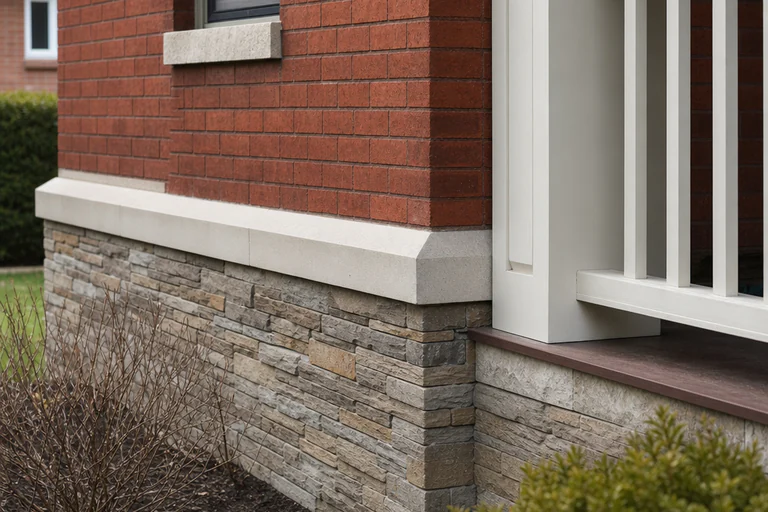
Red brick wall above a limestone ledge and natural thin-stone veneer foundation beside painted porch trim

Brick, stone, limestone, and painted porch details meet at water-shedding transitions that a veneer layout must respect.

Why Homeowners Choose Stone Veneer

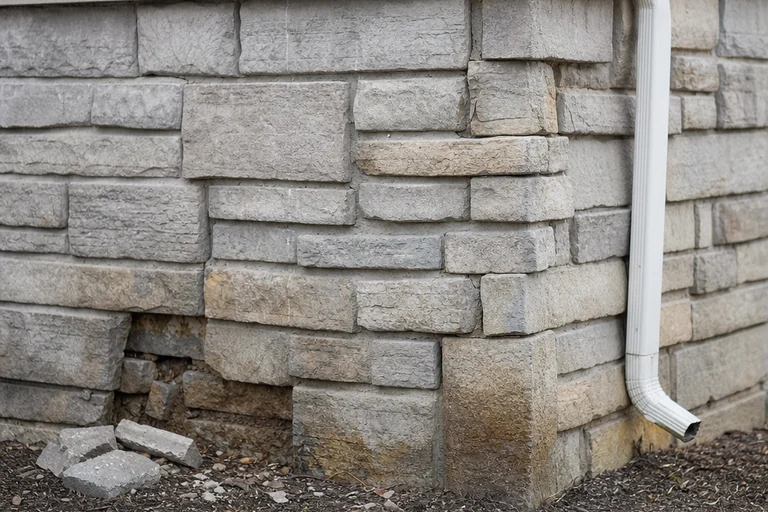
Natural stone veneer corner with localized loose units, open joints, and staining near grade

Open joints, a failed corner return, and localized base staining can signal moisture entry without requiring the entire veneer field to be unstable.

  • ✓Outdated exterior appearance — dated siding, stucco, or plain concrete that lacks character
  • ✓Plain or unattractive foundation walls that draw attention for the wrong reasons
  • ✓Wanting natural stone aesthetics without the weight and cost of full stone construction
  • ✓Curb appeal investment — improving first impressions and perceived property value

Our Stone Veneer Installation Process

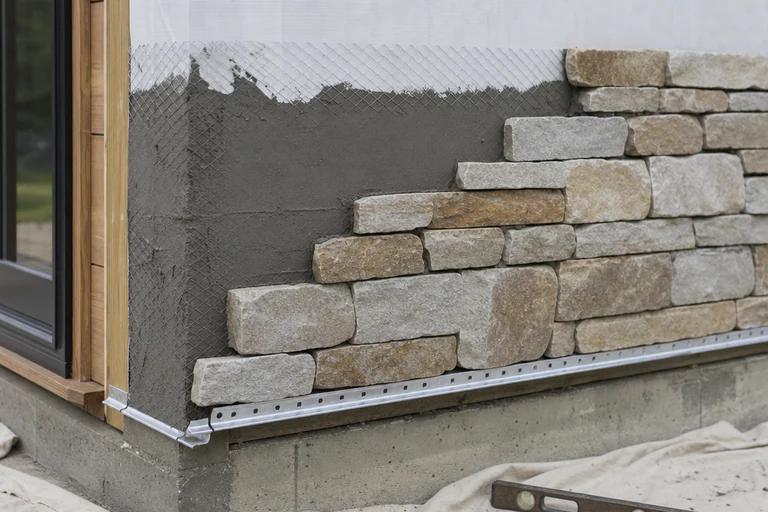
Stone veneer installation stage showing lath, scratch coat, weep screed, set stones, level, mortar, and trowel

A credible exterior veneer assembly begins with moisture management, lath and scratch coat, then builds from supported corner units with consistent bedding.

1

Surface Preparation & Waterproofing

The substrate is cleaned, repaired as needed, and properly waterproofed. Exterior installations receive through-wall flashing at the base and appropriate water-resistant barrier treatment to prevent moisture from reaching the substrate behind the stone.

2

Layout Planning

Stone is dry-laid and pattern-planned before any setting begins. This ensures consistent joint widths, avoids awkward cuts at visible transitions, and confirms the visual layout matches expectations before it's permanent.

3

Stone Installation

Stone is set in the appropriate mortar or adhesive for the substrate and application type. Joints are maintained consistently, and each course is checked for level and plumb as the installation progresses.

4

Grouting & Sealing

Joints are grouted with a color-matched mortar that complements the stone selection. Once cured, exterior installations are evaluated for sealing based on the stone type and exposure conditions.

Benefits of Professional Stone Veneer Installation

✓Dramatically improves exterior or interior appearance with the visual richness of natural stone
✓Adds perceived value to a home without the structural requirements of full stone masonry
✓Properly installed stone veneer in Michigan's climate performs for decades with minimal maintenance
✓Available in a wide range of stone types, colors, and profiles to complement different architectural styles
✓More versatile than full stone construction — applicable to exteriors, interiors, fireplaces, and accent features
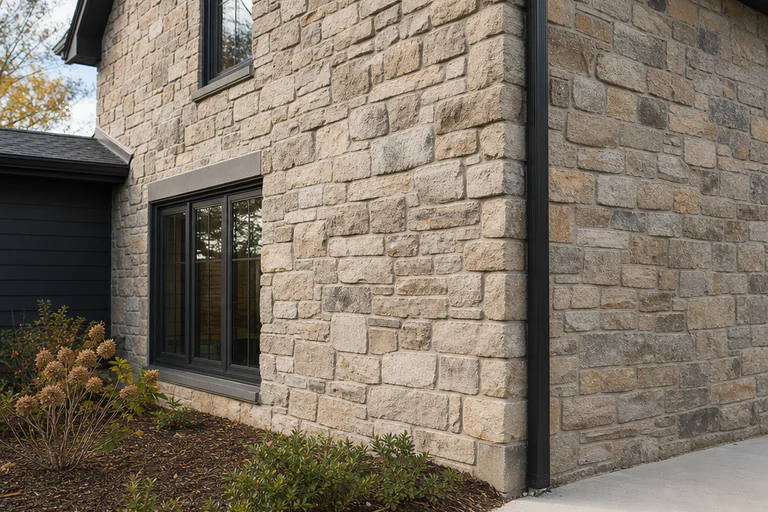
Completed natural thin-stone veneer wall with varied units, full joints, and a stable outside corner

A finished veneer field uses varied but balanced units, interlocking returns, full joints, and clean terminations rather than repeated panels or pasted-on corners.

Request Your Free Stone Veneer Installation Estimate

Tell us about your project and we'll schedule a free on-site assessment. No obligation — just honest guidance from local masonry specialists.

Tell Us About Your Project

By submitting this form, you agree to our Terms and Conditions and Privacy Policy.

Frequently Asked Questions

Is stone veneer a good investment for a Grand Rapids home?▼

Yes — stone veneer delivers the appearance of full stone masonry at a fraction of the weight and cost, and it's consistently cited among the exterior improvements with strong curb-appeal return. For Grand Rapids homes, the key qualifier is installation quality: proper substrate waterproofing and flashing are what determine whether an exterior installation performs for decades in Michigan's freeze-thaw climate.

What is the difference between natural stone veneer and manufactured stone veneer?▼

Natural stone veneer is real quarried stone cut to a consistent thickness — typically an inch or more. Each piece has unique texture, color variation, and character that varies naturally. Manufactured stone veneer is a cast concrete product designed to resemble natural stone, with more consistent sizing and a wider range of uniform color options. Both perform well in Michigan when properly installed. Natural stone tends to have more visual variation and texture depth; manufactured stone offers more design flexibility in terms of shape and color consistency.

Will stone veneer hold up to Michigan freeze-thaw cycles?▼

Yes, when installed correctly. The critical factors are proper substrate waterproofing, appropriate flashing at the base of exterior installations, and using mortar and setting materials rated for exterior freeze-thaw exposure. Stone veneer that fails prematurely in cold climates almost always traces back to moisture getting behind the veneer and freezing — a substrate preparation and flashing issue, not an inherent problem with the stone itself.

Does stone veneer require much maintenance?▼

Stone veneer is generally low-maintenance once properly installed. Exterior installations should be periodically inspected for any joint deterioration or cracks, particularly after severe winters. Some stone types benefit from a penetrating sealer application every several years to limit moisture absorption. Interior installations are essentially maintenance-free beyond normal cleaning.

Who installs stone veneer near me in Grand Rapids?▼

Grand Rapids Masonry & Restoration installs natural and manufactured stone veneer across Greater Grand Rapids and West Michigan, including East Grand Rapids, Grand Haven, Holland, Spring Lake, Caledonia, Allendale, and Hudsonville. We handle exterior facades, foundation wraps, porch columns, and interior fireplace surrounds and accent walls, with free estimates that cover substrate preparation and flashing details.

Does stone veneer add value to a home?▼

Stone veneer is consistently cited as one of the exterior improvements with strong return on investment, particularly for curb appeal-driven value. Exterior stone veneer on a foundation, entry, or facade improves first impression significantly. The actual return varies by neighborhood, property type, and the quality of the installation. We're happy to discuss realistic expectations for your specific project during the estimate.

Stone Veneer Installation Service Areas

Serving West Michigan communities with expert stone veneer installation services