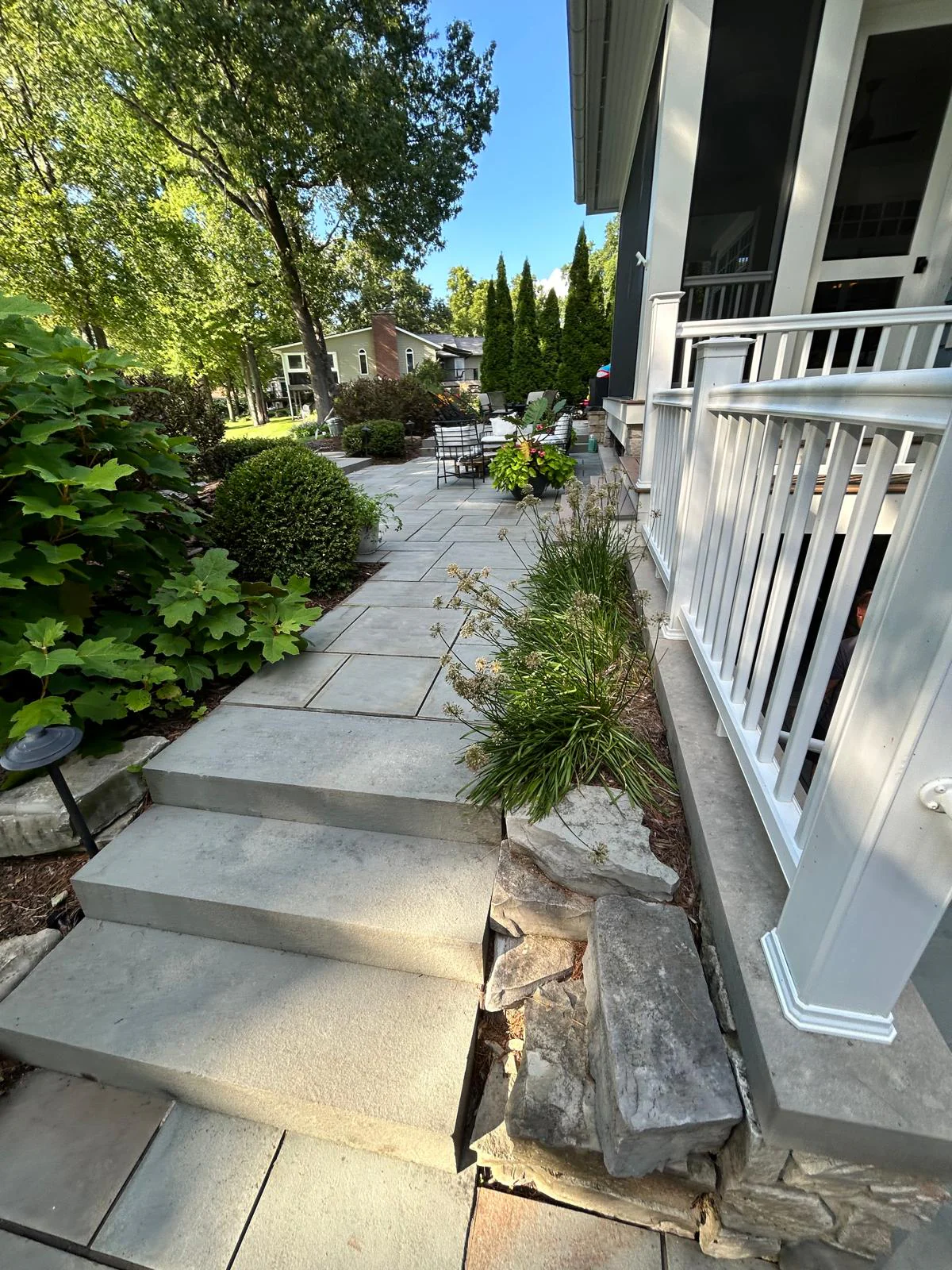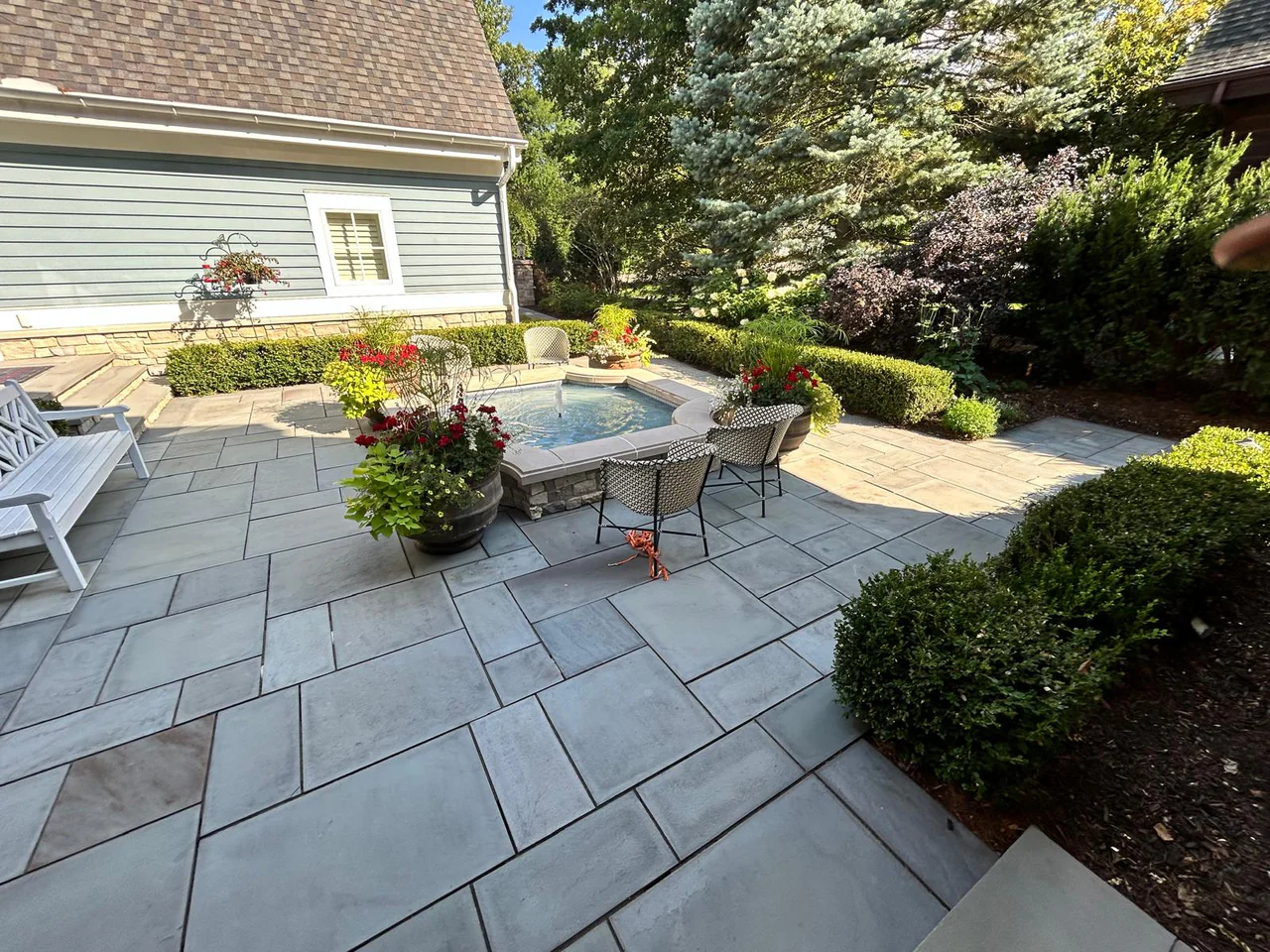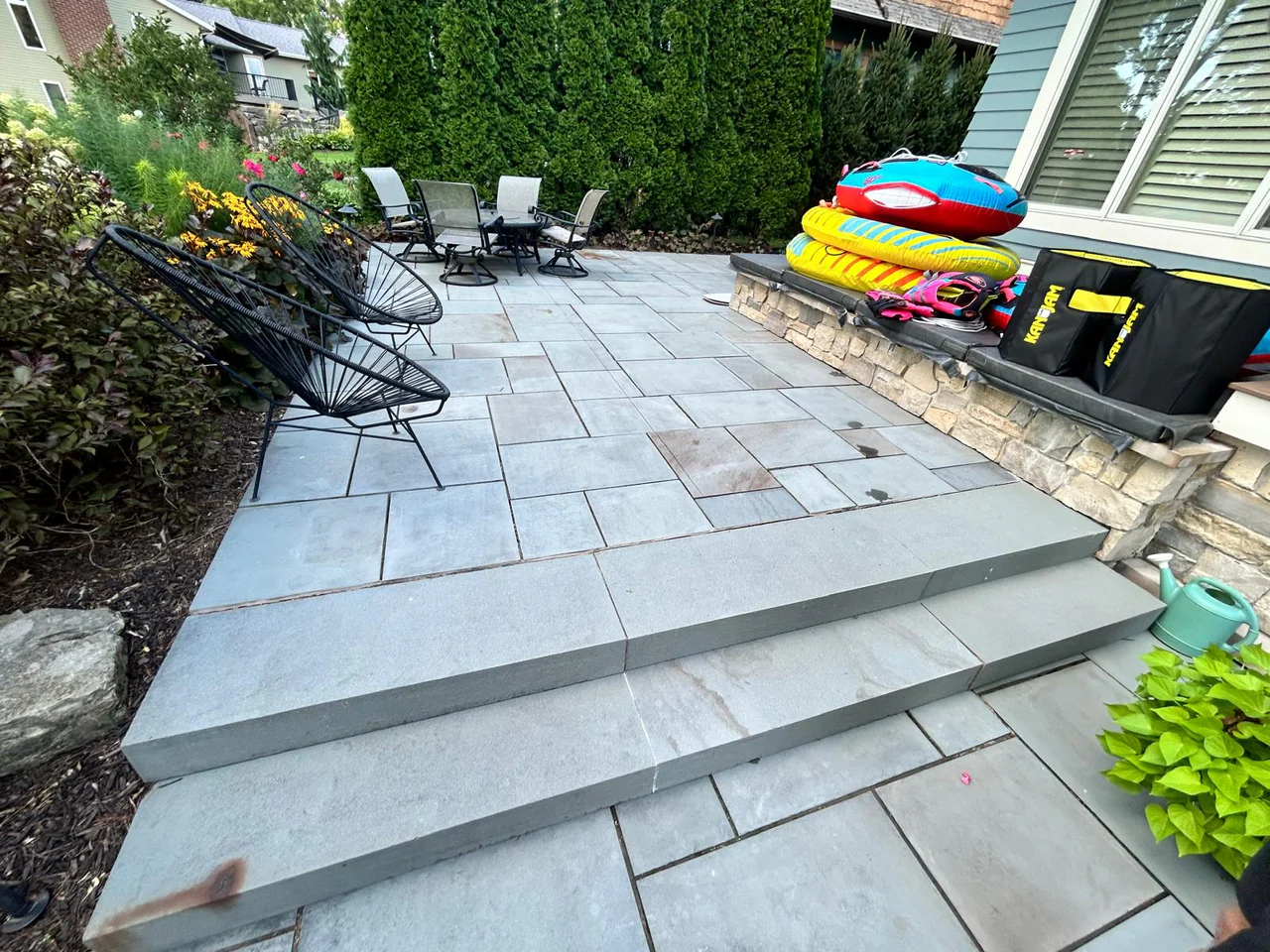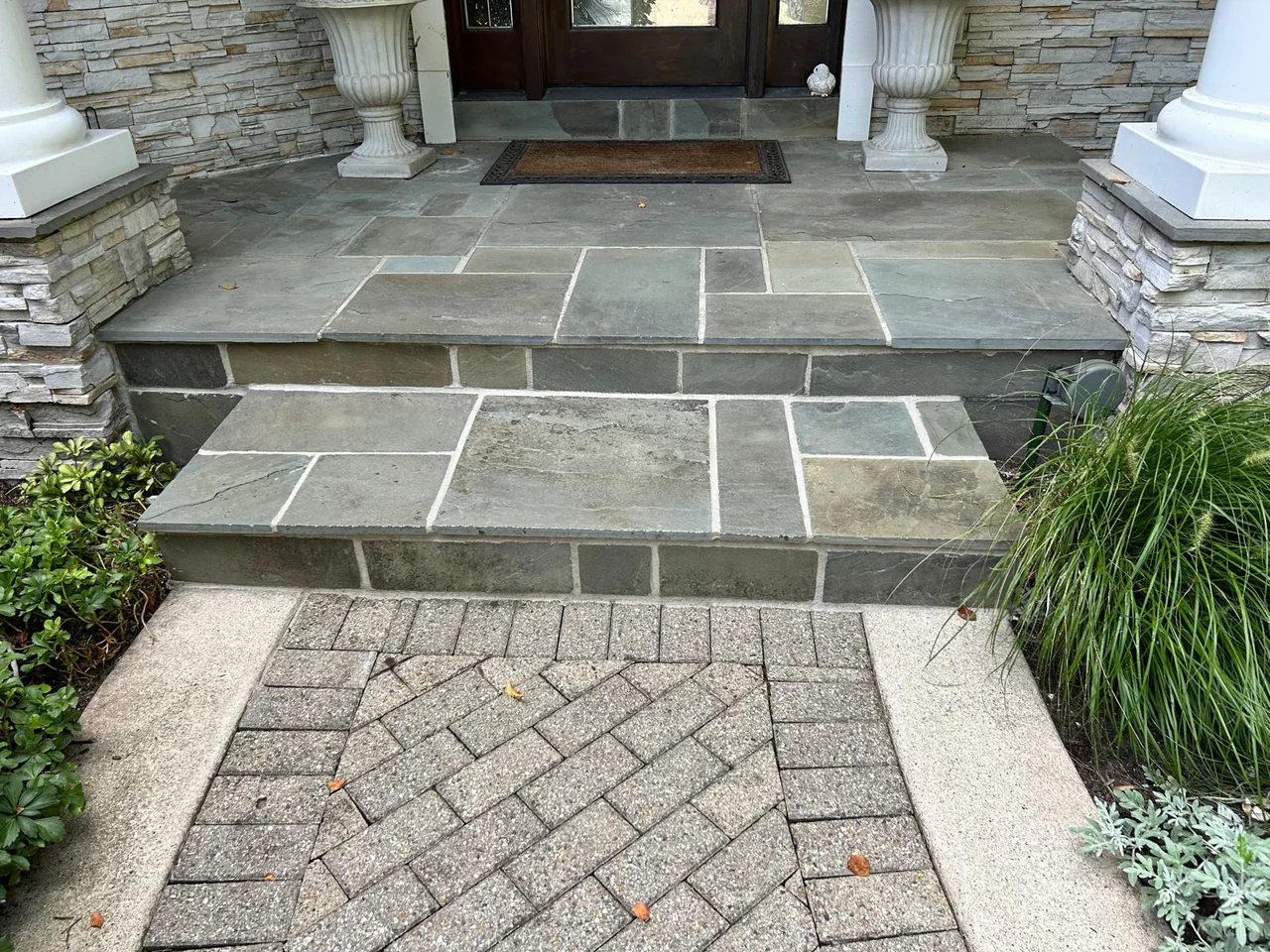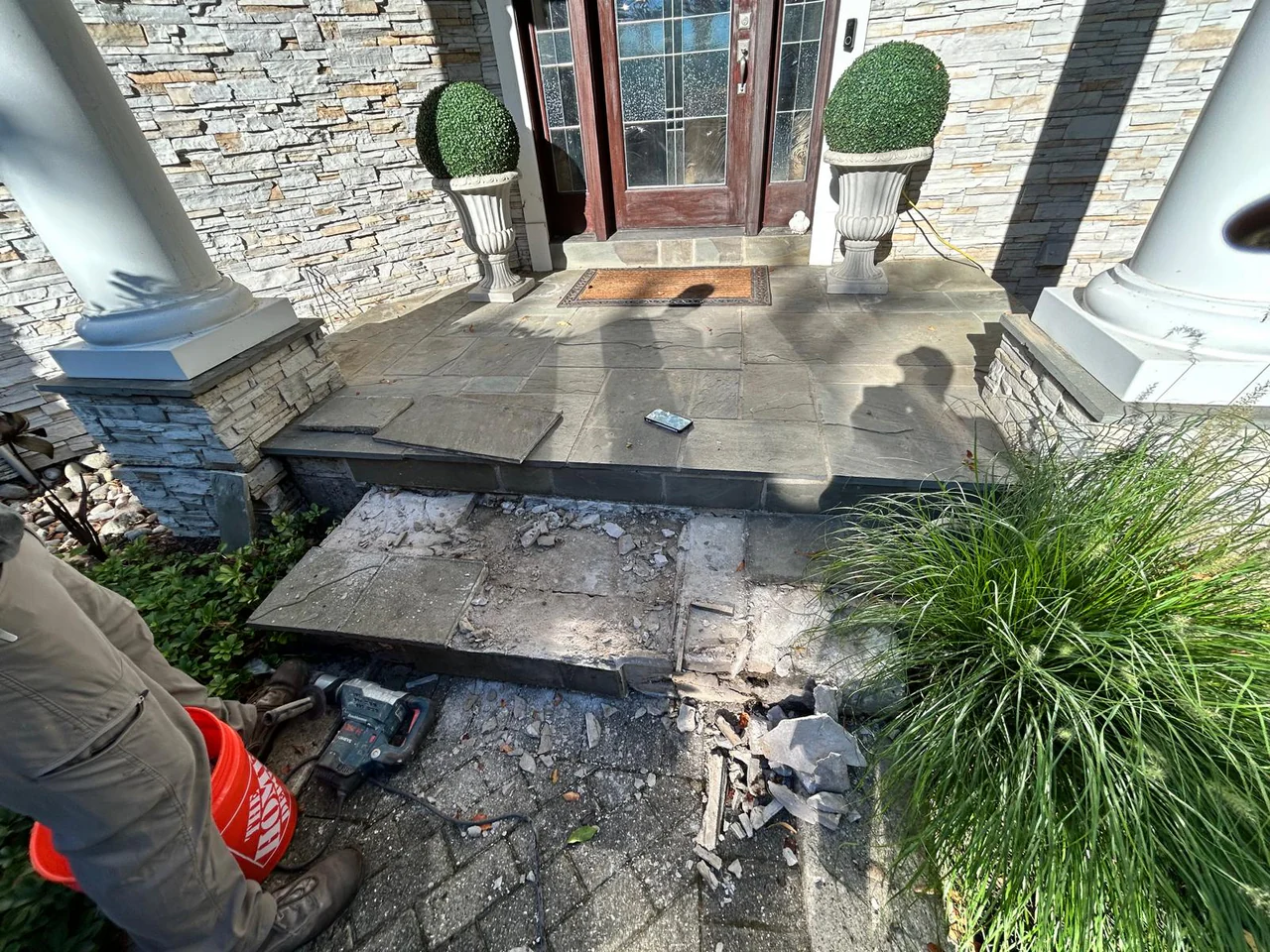

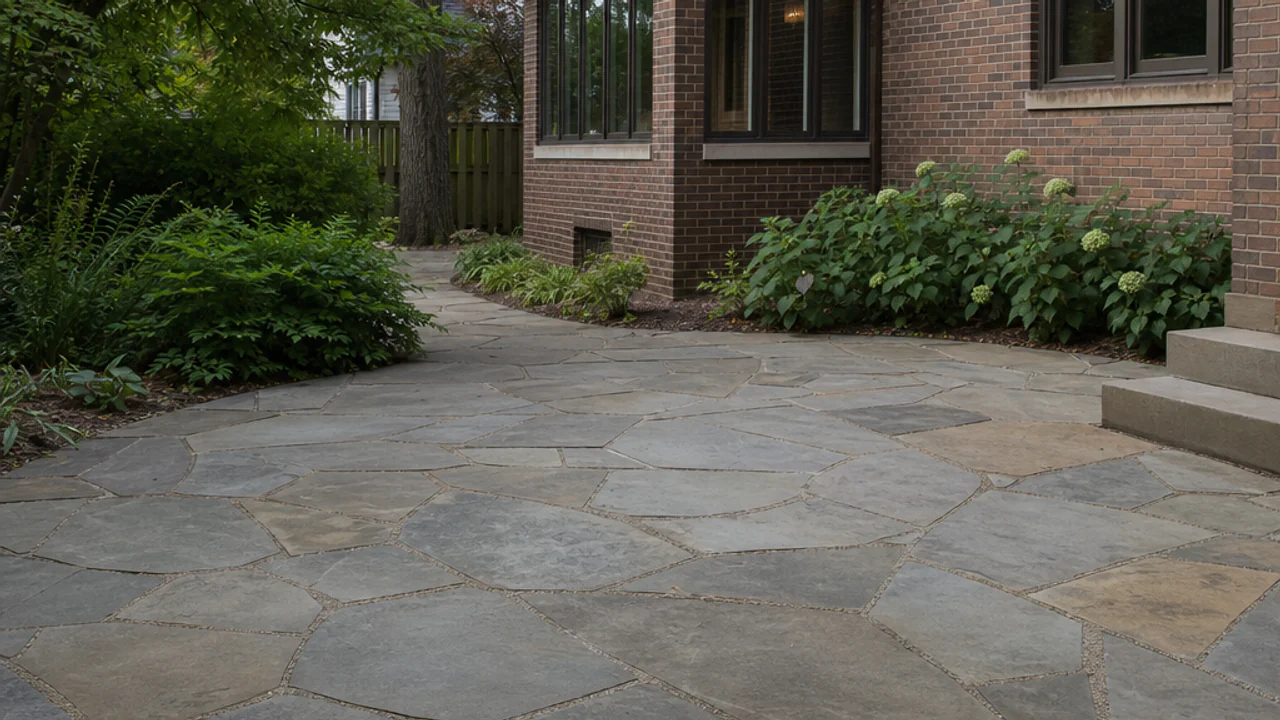
Michigan's freeze-thaw cycles are the defining challenge for any outdoor hardscape. Water in the ground freezes, expands, and exerts upward pressure on anything sitting above it — a process called frost heave. Stone patios that haven't been built with adequate base depth and proper drainage will show the effects within a few winters: uneven surfaces, lifted sections, and cracked stone. The solution isn't complicated, but it requires doing the work that some contractors skip to save time and money.
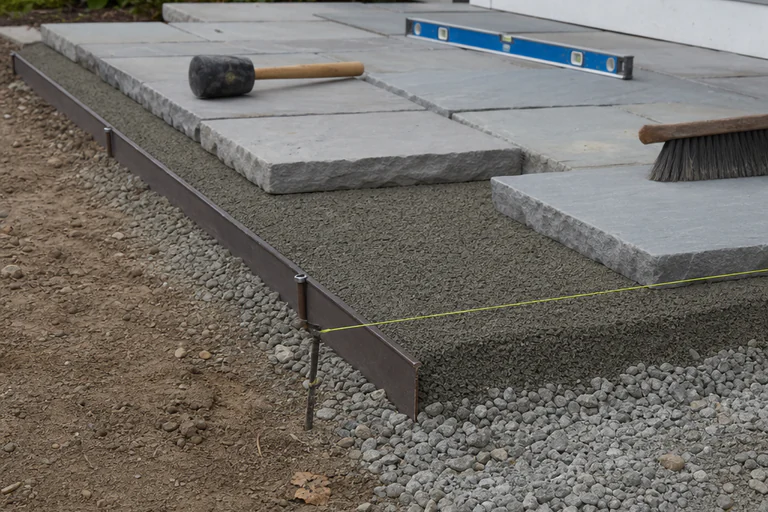
The key to a long-lasting stone patio in West Michigan is the base — specifically, excavating to the appropriate depth for the application, installing proper drainage if the site requires it, and compacting aggregate base material in lifts rather than in a single deep pour. This gives the base consistent density and allows water to drain out of the system rather than saturating the material beneath the stone and contributing to frost movement. Stone set on a properly built base in Michigan performs for decades.
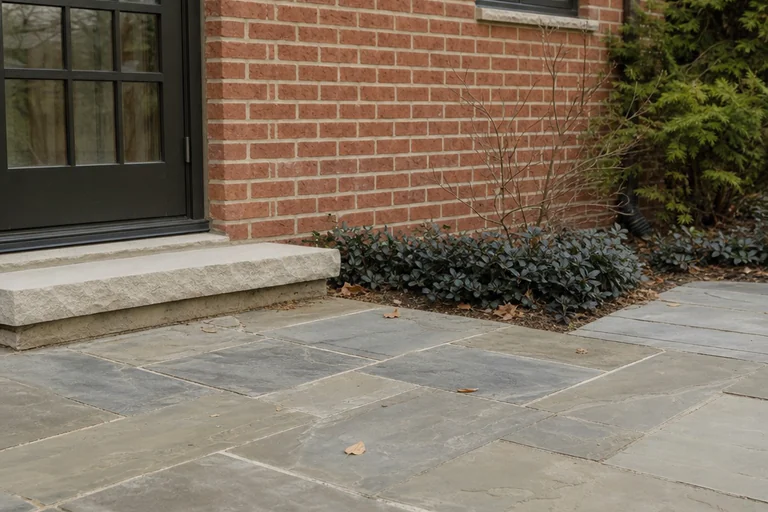
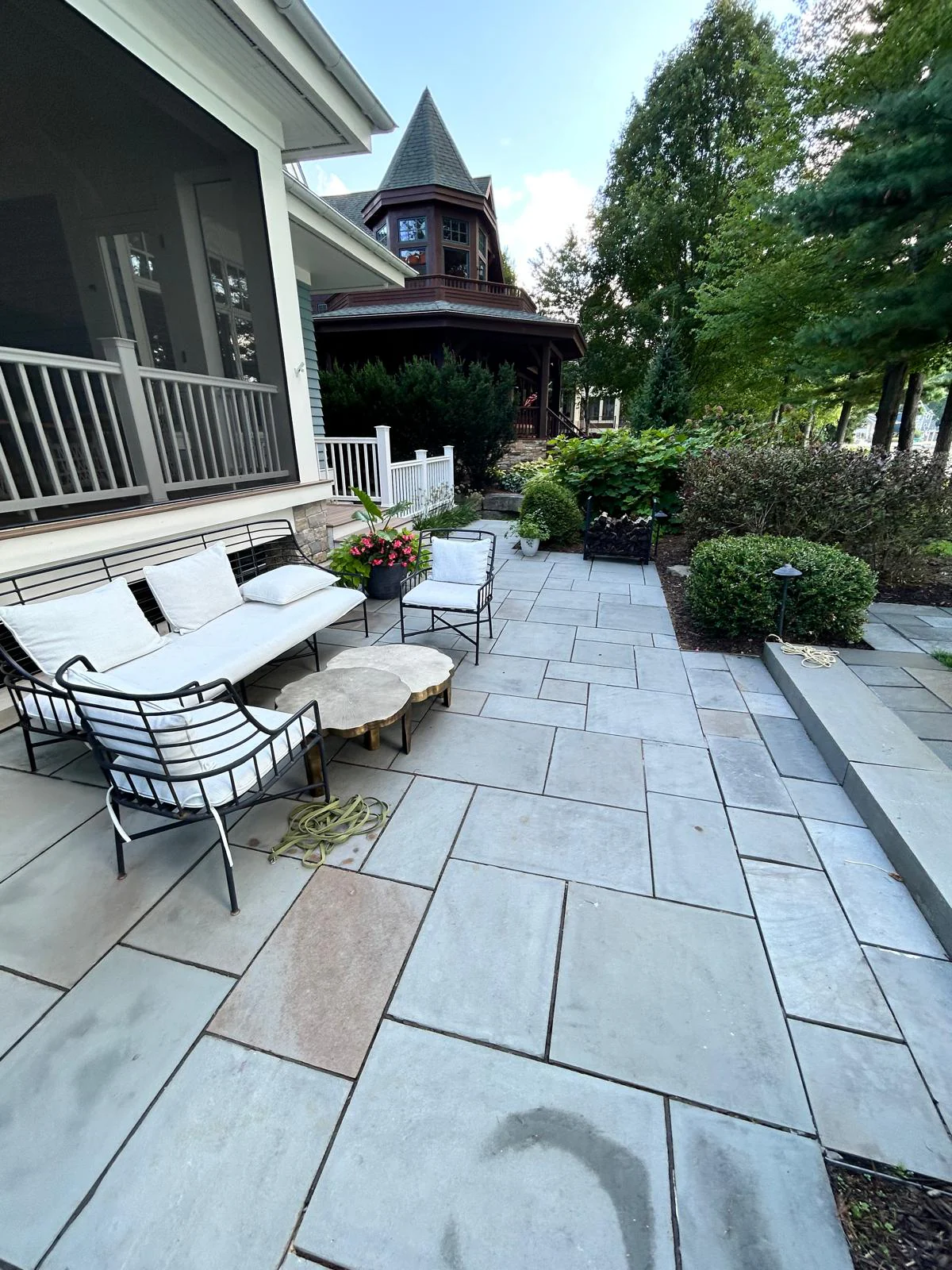
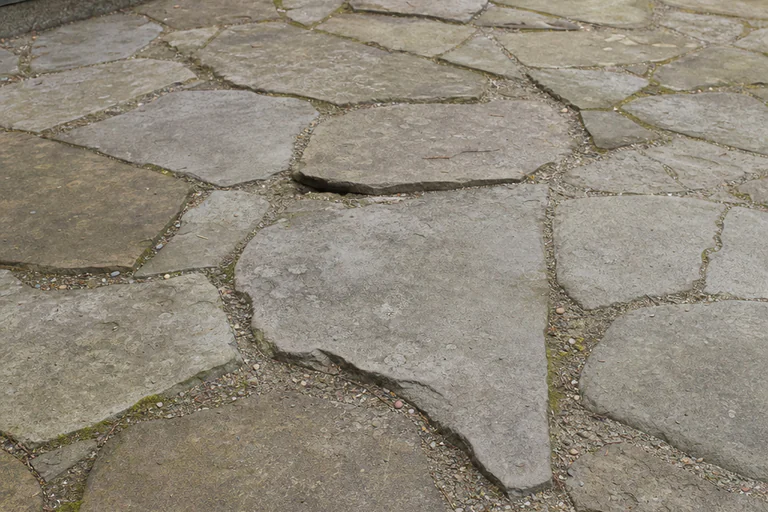
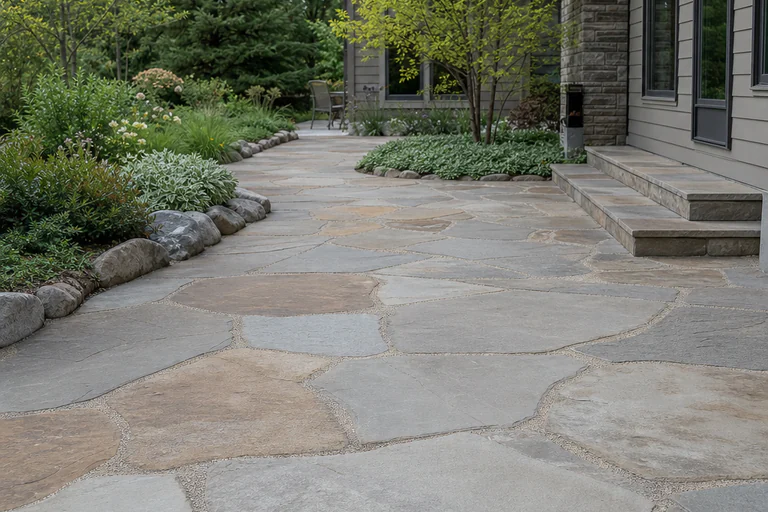
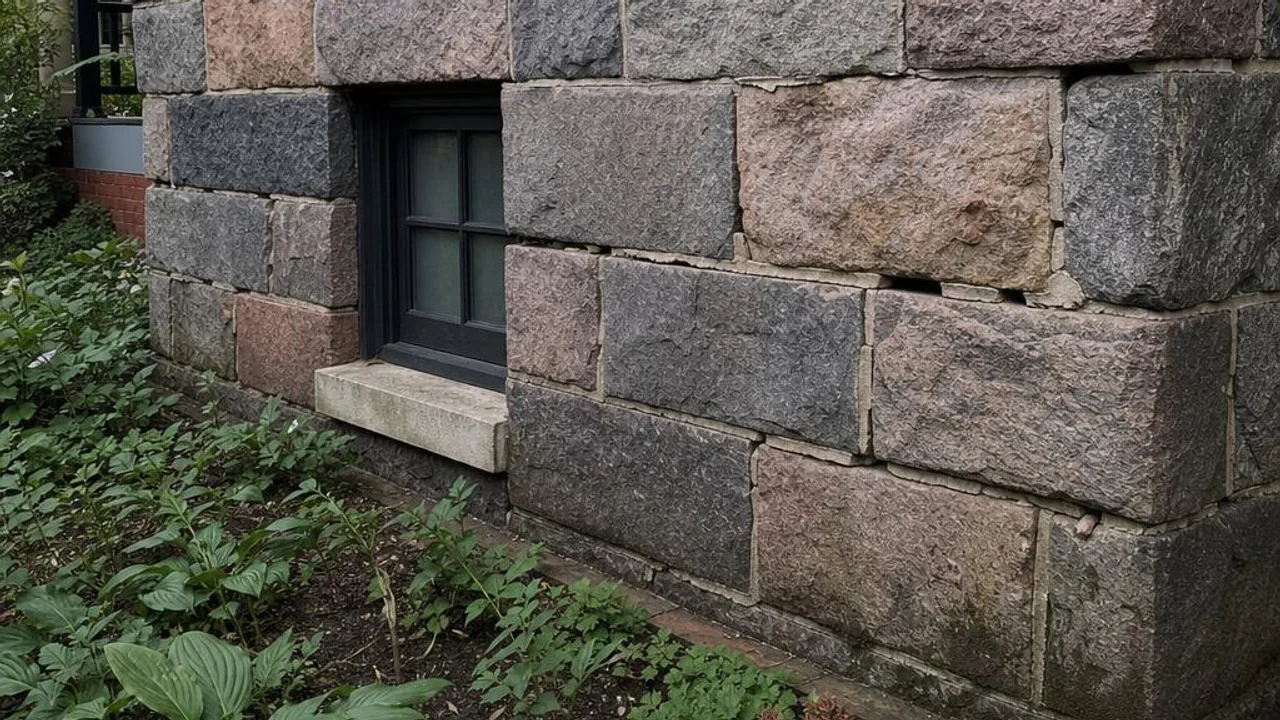
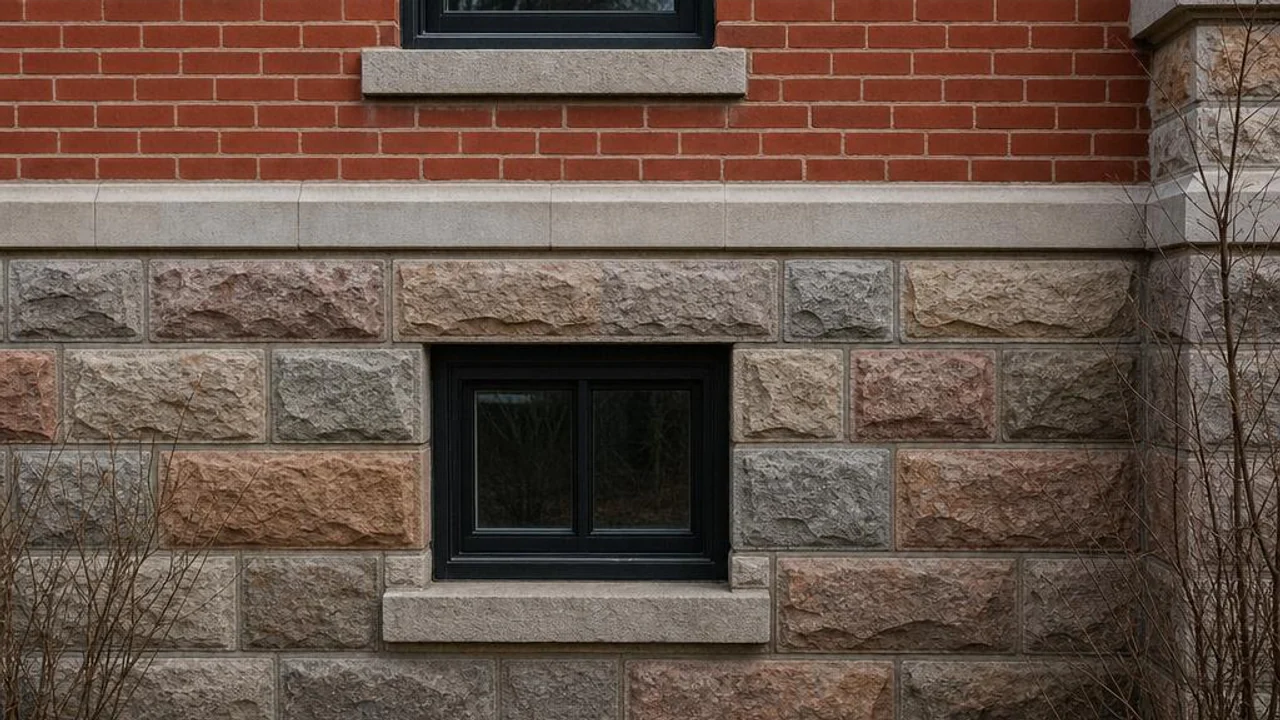
Natural stone offers a range of options that affect both appearance and performance. Irregular flagstone gives a more organic, informal appearance and is well-suited to curved patio layouts. Cut stone — squared and trimmed to consistent dimensions — allows tighter joint spacing and a more formal aesthetic. Different stone types vary in texture, color, and porosity, all of which affect both the look and the long-term behavior in a cold, wet climate. We discuss these options during the planning stage so your stone selection fits both your aesthetic goals and the site conditions.
Drainage is the other critical factor. A patio that collects and holds water — whether because the grade isn't directing water away from the house or because the base has poor permeability — will create ongoing problems. Before any excavation begins, we assess drainage and grade so the completed patio performs correctly, not just looks good on day one.