
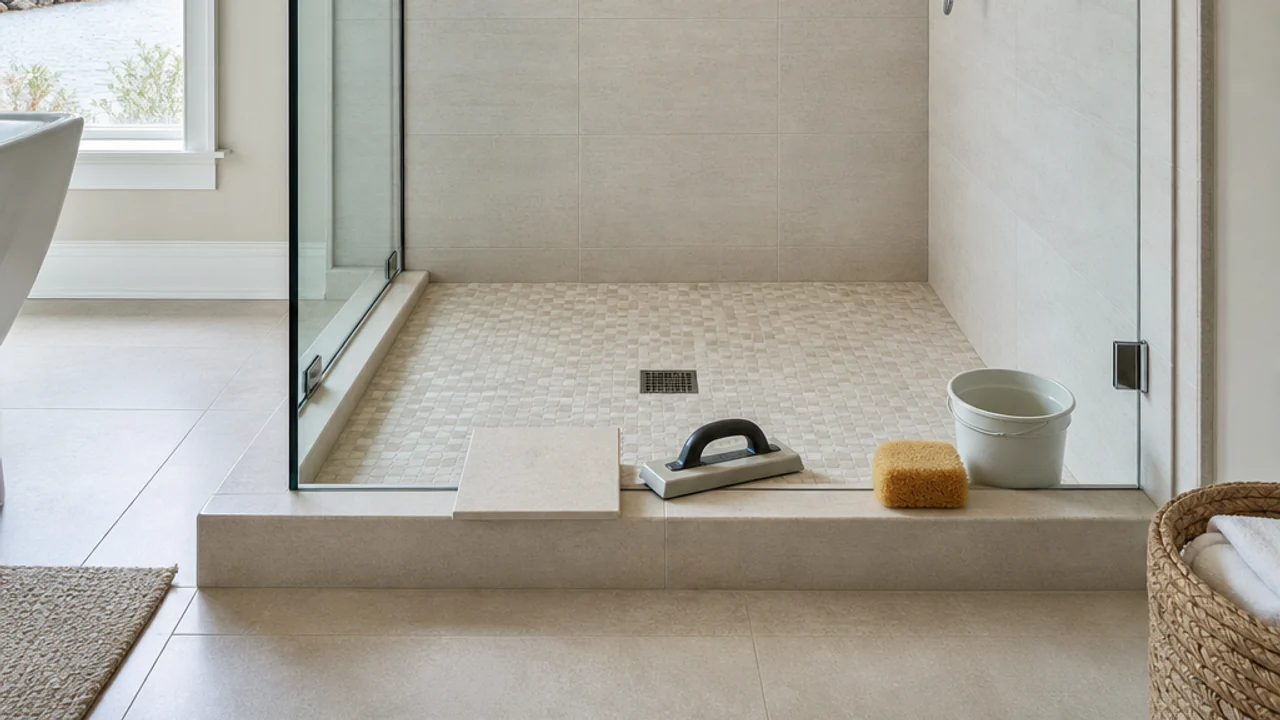
This is the question that matters, and it is worth being blunt about: a shower repair is only worth doing if the waterproofing behind the tile is still intact. Tile and grout are the wearing surface. The membrane and pan behind them are what keep water out of your framing. If the barrier has failed, new tile and fresh grout over the top of it will look correct for a season and then present the same problem, because nothing about the actual leak was addressed.
So the first thing we do is work out which situation you are in. Symptoms that usually point to a genuine repair: a single cracked or chipped tile from impact, grout worn or stained in a localized area, one corner where rigid grout was used and has cracked, or a loose tile in an otherwise sound and well-bonded field. Symptoms that usually point to a failed assembly: a stain or soft spot on the ceiling or wall below the shower, a persistent musty smell, several tiles sounding hollow across an area, tile that has released along a whole corner or the base of a wall, or grout that has been repaired before and reopened in the same place.
That last one is worth dwelling on, because it is the most common story we hear. A homeowner regrouts a shower corner, it looks fine for a while, it reopens. They regrout it again. It reopens again. The grout is not the problem — something is moving or water is getting behind it, and grout is simply the weakest part of the assembly and therefore where the symptom appears. Repeat failure in the same spot is diagnostic information, not bad luck, and it usually means the answer is a rebuild rather than a third repair.
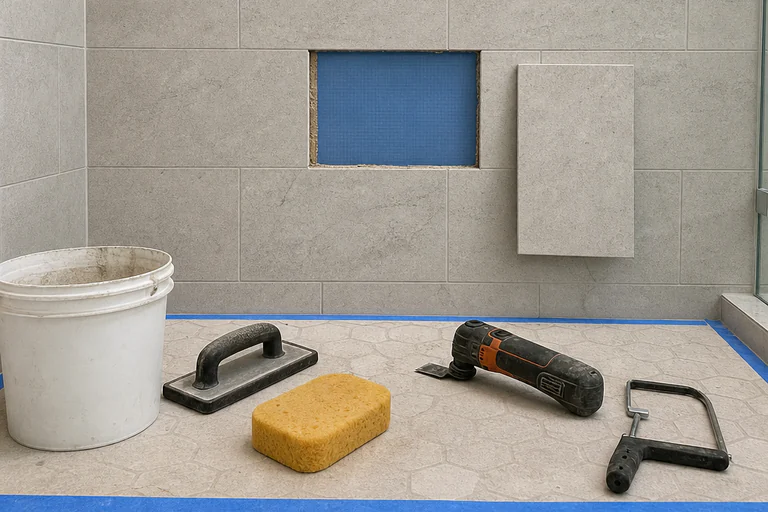
Where a repair is the right call, we do it properly. That means removing failed grout to full depth rather than skimming over it, using flexible sealant at inside corners and changes of plane where grout does not belong in the first place, sourcing replacement tile as close to the original as is realistically available, and being honest that grout color on an aged shower can be matched closely but not perfectly. Regrouting a sound, well-bonded shower is a genuine and cost-effective refresh. Regrouting a failing one is money spent on a delay.
We handle shower and tub surround repair, regrouting, individual tile replacement, and full shower rebuilds when that is what the situation actually calls for. Homeowners may describe this as tile shower repair, shower tile repair, or bathroom tile repair; this page covers wet-area tile that depends on a sound waterproofing assembly. For dry bathroom floor or wall repairs where waterproofing is not involved, see our tile repair and restoration service. If the diagnosis comes back as a rebuild, that work is covered on our shower tile installation page.
A leaking shower pan is the repair homeowners most often hope can be fixed from above, so it deserves a separate word. The pan is the sloped, waterproofed base under the floor tile, and when it fails, the water usually shows up outside the shower — below the floor, around the curb, or in the ceiling underneath. Some leaks that look like a pan failure turn out to be a failed sealant joint at the curb or a gap around a penetration, and those can be repaired locally without disturbing the floor. A leak at the drain body or the valve is a plumber's repair. When the pan's waterproofing layer itself has failed, though, it sits beneath the tile and the materials it is set in, where regrouting cannot reach it, and the reliable fix is removing the floor tile and rebuilding the pan.