
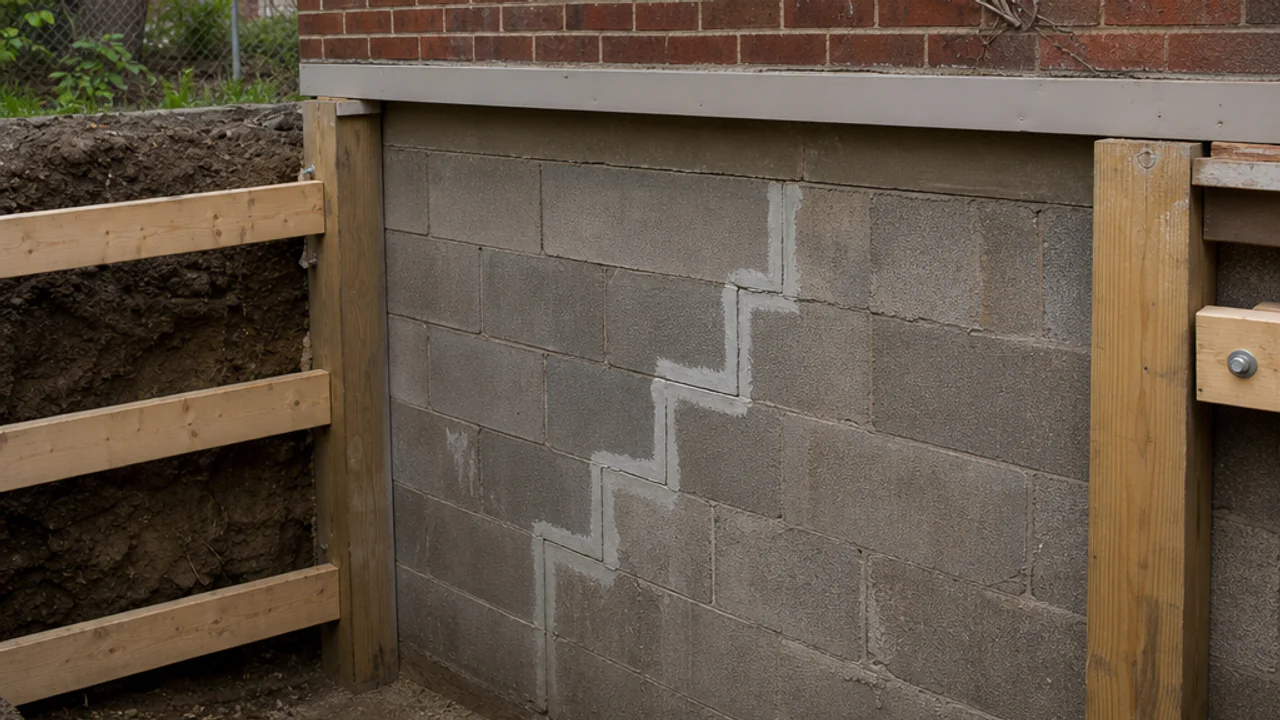
Localized stair-step repair in a concrete block foundation below an older brick wall

Foundation Repair in Grand Rapids, MI

Foundation problems don't get better on their own. Grand Rapids Masonry & Restoration repairs cracked, bowing, and water-damaged masonry foundations before small problems become major structural concerns.

✓ Serving Greater Grand Rapids
✓ Free Estimates
✓ Historic Preservation Specialists

Cracks in a block or brick foundation, water seeping through foundation walls, or bowing sections that seem to be getting worse — these are problems worth addressing sooner rather than later. Grand Rapids Masonry & Restoration evaluates and repairs masonry foundations throughout the Grand Rapids area. Our masonry cost guide explains why structural and hidden conditions need a project-specific price; get a free estimate and we'll assess your foundation honestly.

When Are Foundation Cracks in a Grand Rapids Home a Serious Problem?

Not every foundation crack requires immediate major intervention, but every foundation crack is worth evaluating. Grand Rapids-area homes experience foundation stress from several directions: Michigan's heavy clay soils expand when wet and shrink when dry, creating lateral pressure on foundation walls; frost penetration affects soils around and beneath foundations; and the natural settling that occurs in any structure over time creates stress on masonry. Understanding what type of crack you're dealing with — and what's causing it — determines how serious it is and what's needed to address it.

Horizontal cracks in block or brick foundation walls are generally a more significant concern than vertical or step-pattern cracks because they typically indicate lateral soil pressure on the wall. Vertical cracks often result from settling or thermal movement and may be stable rather than actively growing. Step cracks that follow mortar joints in block foundations frequently indicate differential settling. An experienced mason can assess whether cracks are active or stable, what's causing them, and what intervention is appropriate.

Water infiltration through foundation walls is a common problem in older Grand Rapids homes. Water can enter through cracks, through deteriorated mortar joints in older block or brick foundations, or through the joint where the foundation wall meets the footing. Beyond the obvious problem of water in the basement, moisture that cycles through masonry in Michigan's climate accelerates deterioration — freeze-thaw damage in mortar joints and spalling of block or brick surfaces are both driven by moisture.

The foundation is the structural base of everything above it. Addressing foundation problems while they are limited in scope is always preferable to waiting until the damage has progressed. The cost and complexity of foundation repair scales significantly with the extent of the problem. A modest crack that can be stabilized and sealed is a very different proposition than a wall that has progressed to significant bowing or structural compromise.
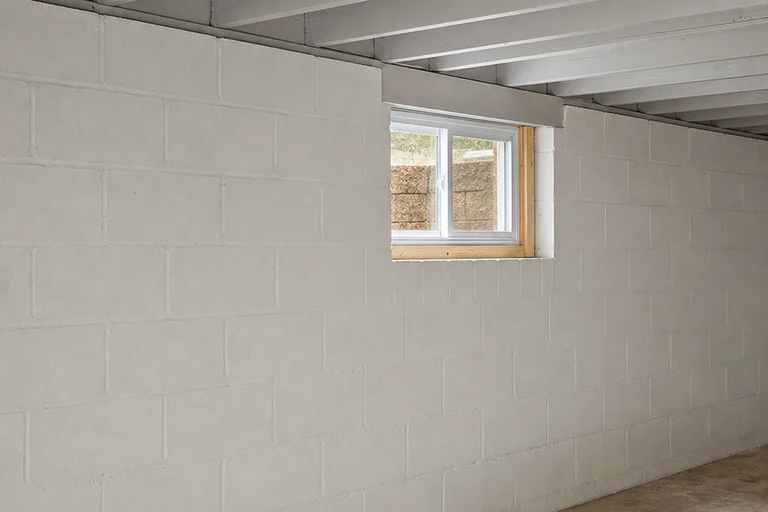
Straight painted concrete block foundation wall supporting floor framing beside a small basement window

Foundation assessment begins with the complete load path: aligned masonry, continuous bearing, framed openings, and the floor structure above.

Foundation Problems We Address

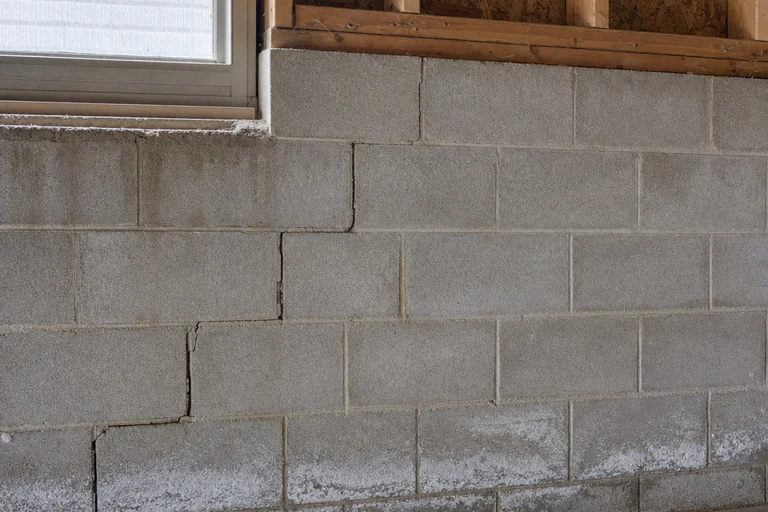
Concrete block foundation with a localized stair-step crack and light efflorescence along lower courses

A stair-step crack following mortar joints and a low moisture band are observable conditions that warrant diagnosis before repair.

  • ✓Cracks in block, brick, or stone foundation walls — including vertical, horizontal, and step-pattern cracks
  • ✓Water seeping through foundation walls — moisture infiltration through cracks, joints, or deteriorated masonry
  • ✓Bowing foundation walls — sections that are moving laterally under soil pressure
  • ✓Spalling or deteriorating block — block faces that are breaking down due to moisture cycling

Our Foundation Repair Process

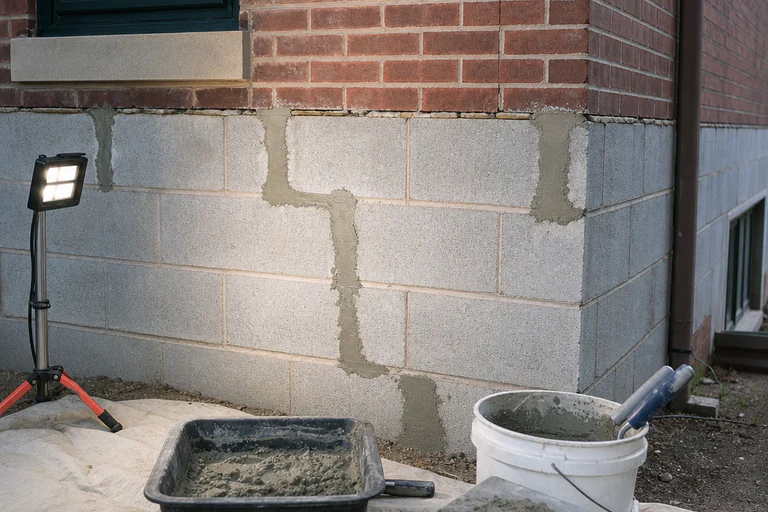
Concrete block crack repair stage with cleaned joints, fresh mortar, work light, mortar pan, bucket, and hand tools

Localized repair cleans and fills the affected joints while preserving the block bond and wall plane rather than smearing a surface patch across the wall.

1

Foundation Inspection

We examine the foundation from both exterior and interior, assessing crack patterns, extent of deterioration, evidence of moisture infiltration, and any signs of active movement or bowing.

2

Problem Diagnosis

We identify the likely cause of the foundation issues — whether soil pressure, moisture, settling, or deterioration — and determine what repair approach addresses the actual cause rather than just the visible symptom.

3

Repair & Reinforcement

Cracks are repaired, deteriorated mortar is repointed, damaged blocks or bricks are replaced, and any necessary reinforcement to stabilize the wall is installed. The approach is specific to the conditions found.

4

Waterproofing & Protection

Repaired areas are treated to limit future moisture infiltration. This may include crack injection sealants, repointing with hydraulic cement in areas of active water infiltration, or application of masonry waterproofing products on the foundation wall surface.

Benefits of Professional Foundation Repair

✓Addresses foundation problems while they are still limited in scope and less costly to fix
✓Stops water infiltration that accelerates masonry deterioration and causes interior moisture problems
✓Restores structural integrity to compromised foundation sections
✓Provides an honest assessment of foundation conditions — distinguishing cosmetic concerns from structural issues
✓Protects the investment represented by the structure above the foundation
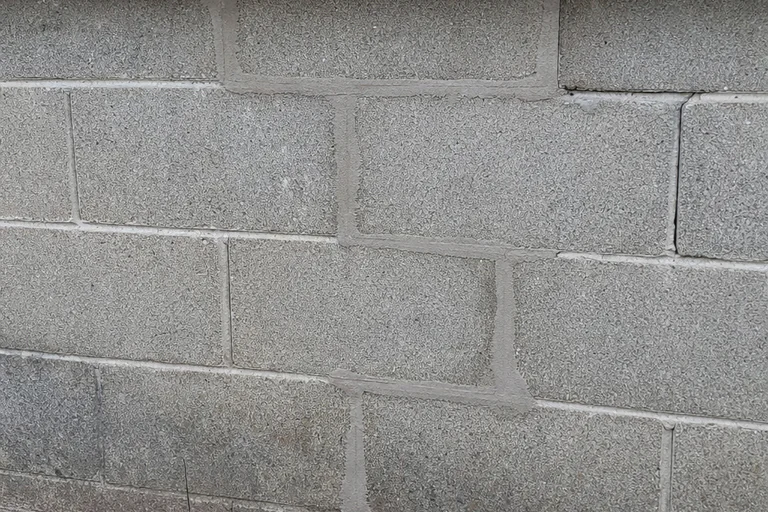
Concrete block wall with a localized matched-mortar repair and coherent bed and head joints

A completed localized repair restores full joints and continuity while leaving the surrounding sound block undisturbed.

Request Your Free Foundation Repair Estimate

Tell us about your project and we'll schedule a free on-site assessment. No obligation — just honest guidance from local masonry specialists.

Tell Us About Your Project

By submitting this form, you agree to our Terms and Conditions and Privacy Policy.

Frequently Asked Questions

When are foundation cracks in a Grand Rapids home a serious problem?▼

Horizontal cracks are the most serious — they typically indicate lateral soil pressure bowing the wall and warrant immediate professional evaluation. Step-pattern cracks following mortar joints often signal differential settling, while vertical cracks from settling or thermal movement may be stable. Any crack that is actively growing, or that admits water, needs attention. Michigan's clay soils and freeze-thaw cycles mean cracks here rarely stay the same size over time.

When are foundation cracks a serious structural concern?▼

Horizontal cracks in block or brick foundation walls warrant immediate professional evaluation because they can indicate the wall is bowing under lateral soil pressure. Large stair-step cracks in block that follow a diagonal pattern may indicate differential settling. Cracks that are actively growing — confirmed by measuring and checking over time — are more concerning than stable cracks. Vertical cracks from settling are often less structurally significant but should still be assessed and sealed to prevent moisture infiltration. The only way to know for certain is a professional evaluation.

What causes foundation problems in Grand Rapids homes?▼

Michigan's clay-rich soils are a significant factor — clay expands when wet and contracts when dry, creating repeated lateral pressure cycles on foundation walls. Hydrostatic pressure from water-saturated soil after heavy rain or snowmelt is another common driver. In older homes, mortar joint deterioration from decades of moisture cycling is a primary mechanism. Tree root pressure and inadequate grading that directs water toward the foundation also contribute. We identify the contributing factors for each specific situation.

Can a damaged masonry foundation be repaired rather than replaced?▼

In most cases, yes. Foundation replacement is an extremely disruptive and expensive undertaking, and it's far less often necessary than homeowners may fear. Cracked, deteriorated, and even moderately bowing masonry foundations can typically be stabilized and repaired. The assessment determines what repair approach is appropriate for the specific conditions. We give honest evaluations and won't overstate the severity of problems.

What does waterproofing a masonry foundation involve?▼

Interior waterproofing of masonry foundation walls typically involves repointing deteriorated joints, addressing active cracks with appropriate sealants or hydraulic cement, and applying a waterproofing coating to the interior wall surface. This does not address the underlying cause of water pressure from the exterior but can be effective at managing moisture infiltration in foundations that are otherwise structurally sound. Exterior drainage and grading improvements that reduce the amount of water reaching the foundation are often recommended alongside masonry repair work.

Foundation Repair Service Areas

Serving West Michigan communities with expert foundation repair services