
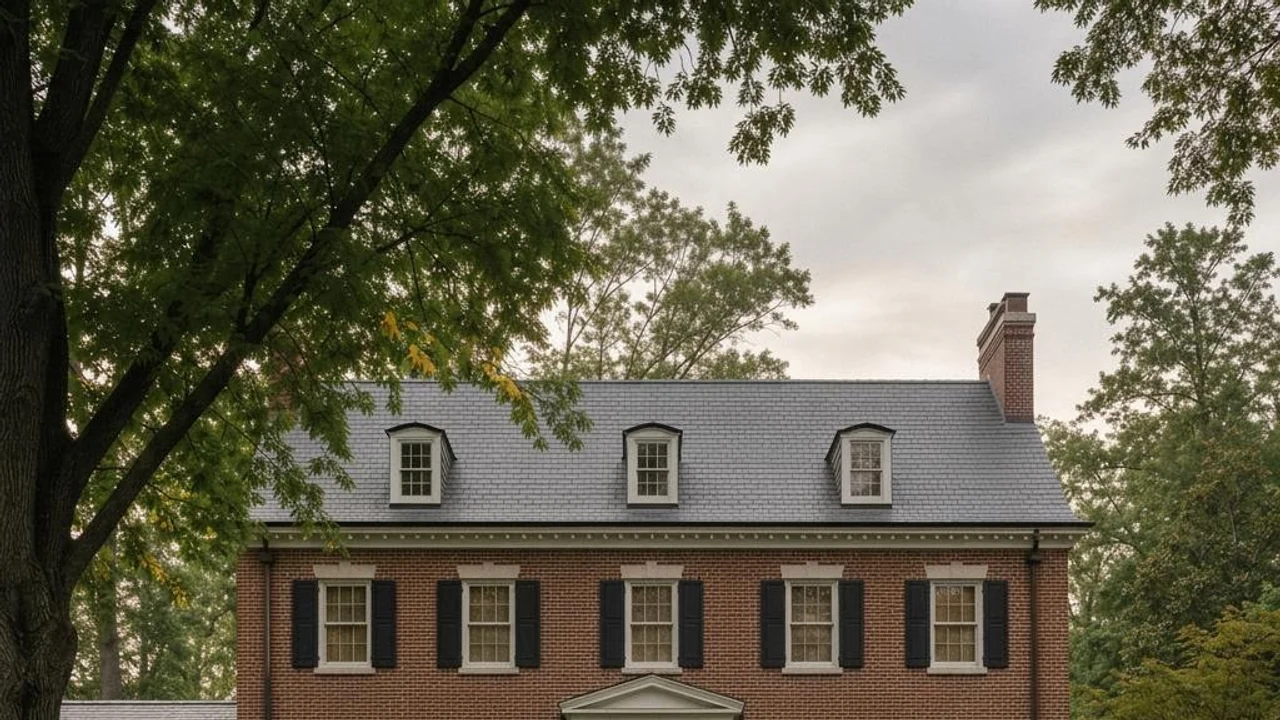
Upper wall of a two-story historic red brick home with light lime mortar joints, segmental brick arches, stone sills, and a corbelled brick cornice

Tuckpointing in Grand Rapids, MI

Crumbling mortar joints are one of the most common — and most overlooked — sources of water damage in Grand Rapids brick buildings. We remove the failing mortar and replace it with fresh mix matched to your existing joints.

✓ Serving Greater Grand Rapids
✓ Free Estimates
✓ Historic Preservation Specialists

If your brick walls have mortar that's crumbling, recessed, or showing white mineral staining, water is likely already working its way in. Grand Rapids Masonry & Restoration provides professional tuckpointing throughout the Grand Rapids area — matched to your existing mortar color and profile. Review our tuckpointing cost planning ranges, then get a free estimate and we'll assess your joints honestly.

How Does Tuckpointing Protect Grand Rapids Brick Buildings from Michigan Winters?

Mortar joints are the designed weak point in a brick wall — intentionally softer than the brick itself so that when the wall moves slightly with temperature changes and seasonal shifting, the mortar absorbs that stress rather than the brick. Over time, this same characteristic means mortar wears out and needs to be replaced. In Michigan's climate, that process is accelerated by repeated freeze-thaw cycles that push moisture into joints and then expand it as it freezes.

Tuckpointing — also called repointing — is the process of carefully removing deteriorated mortar from the joints between bricks and replacing it with fresh mortar that is properly matched to the original in color, composition, and texture. Done correctly, it restores the weathertight integrity of the wall and should last for decades. Done incorrectly — using the wrong mortar hardness, the wrong color, or the wrong joint profile — it can actually accelerate damage to the surrounding brick.

The mortar matching process matters more than most homeowners realize. Mortar that is harder than the surrounding brick (common with standard modern Portland cement mixes on older buildings) traps moisture and causes the brick face to spall. We assess the existing mortar composition and the age of the building to determine the appropriate mix. On older Grand Rapids homes — particularly those built before mid-century — this often means a softer, lime-based mortar rather than a standard Portland cement mix.

West Michigan weather puts consistent stress on mortar joints. By the time mortar is visibly crumbling or recessed more than a small amount, water has typically already been finding its way in for some time. The good news is that tuckpointing before significant moisture damage occurs is a straightforward, cost-effective repair. Waiting until the damage has progressed substantially means a larger scope of work and, in some cases, brick replacement in addition to repointing.
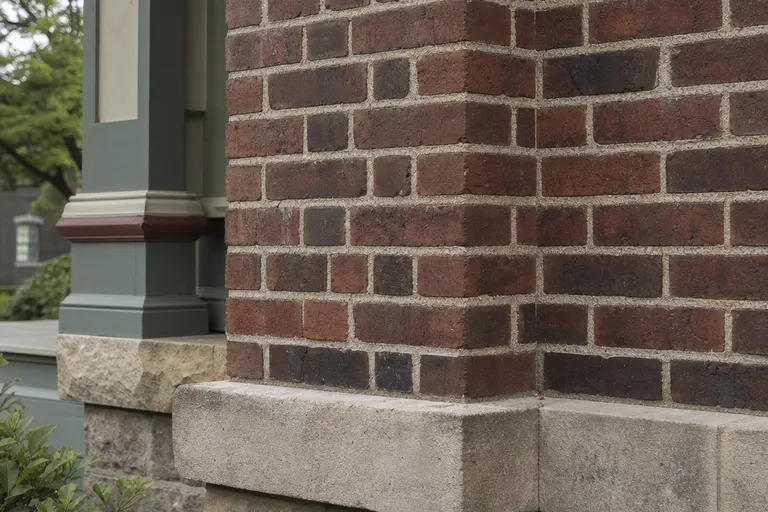
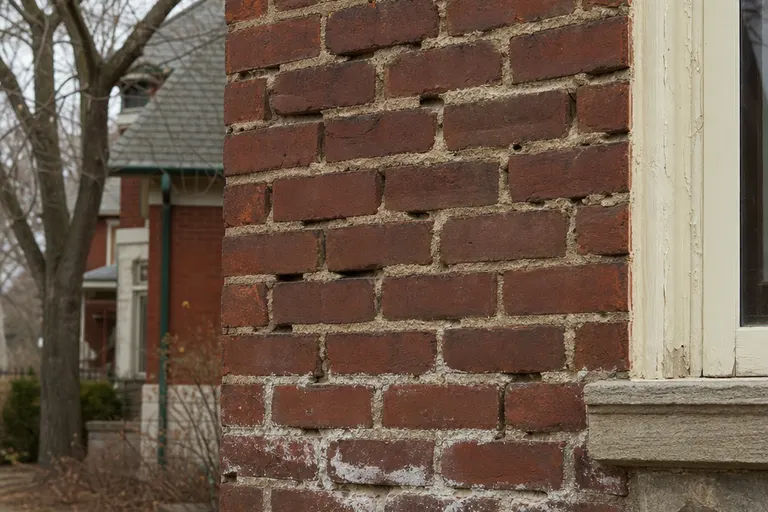
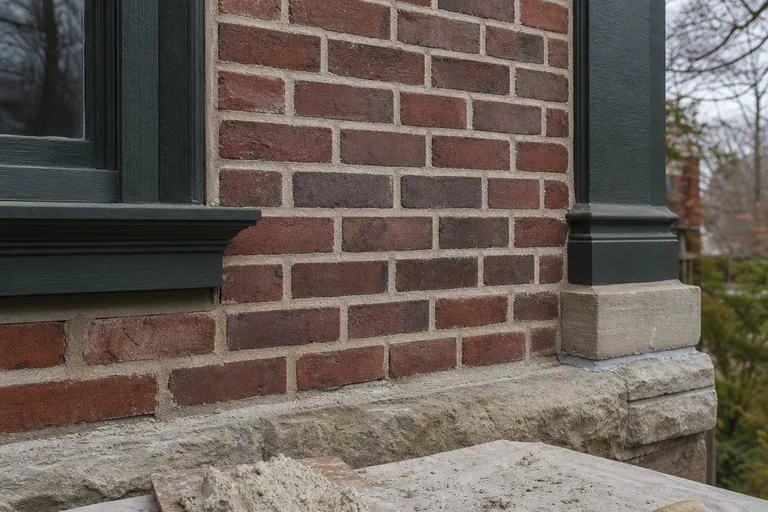
Corner of a historic brick wall showing light lime mortar joints between varied clay bricks, above a limestone cap and stone foundation

In older Grand Rapids brickwork, the mortar joints are the sacrificial element — intentionally softer than the brick so the joints, not the brick, absorb weathering and movement.

Signs Your Mortar Joints Need Tuckpointing

Aged brick wall with recessed, crumbling mortar joints, open voids between bricks, and efflorescence staining near the foundation

Recessed joints, crumbling mortar, open voids, and white efflorescence staining are the typical signs that joints have stopped shedding water and repointing is due.

  • ✓Crumbling or soft mortar joints — mortar that flakes away or can be pushed into with a key or screwdriver
  • ✓White efflorescence staining — mineral deposits on the brick face that signal moisture moving through the wall
  • ✓Water infiltration — damp spots, water stains, or moisture on interior walls near exterior brick
  • ✓Drafty walls — air infiltration through deteriorated joints in older brick homes
  • ✓Visible gaps or missing mortar — joints that are noticeably recessed or have open voids

Our Tuckpointing Process

Brick wall section with joints raked out for repointing, with a pointing trowel and fresh lime mortar on a hawk resting on a drop cloth

Repointing removes deteriorated mortar to a sound depth, then packs fresh, matched mortar into the cleaned joints in stages — without disturbing the surrounding brick.

1

Mortar Grinding

Deteriorated mortar is carefully removed from the joints using angle grinders and hand chisels. We remove enough depth to provide a sound mechanical bond for the new mortar without disturbing the surrounding brick edges.

2

Color & Mix Matching

We assess the existing mortar color, texture, and composition to formulate a replacement mix that matches visually and has the appropriate hardness for the building's age and brick type.

3

New Mortar Application

Fresh mortar is packed into the cleaned joints in lifts, allowing each layer to achieve initial set before the next is applied. This prevents shrinkage cracking and ensures full joint density.

4

Tooling & Cleanup

Once the mortar has reached the appropriate set, joints are tooled to match the original joint profile — typically a concave or weathered profile that sheds water effectively. Excess mortar and debris are cleaned from the brick face.

Benefits of Professional Tuckpointing

✓Restores the weathertight barrier of the brick wall, stopping water infiltration at its source
✓Extends the service life of the brick wall by protecting the brick from moisture-driven damage
✓Matched mortar color integrates with existing brickwork for a clean, consistent appearance
✓Appropriate mortar hardness protects older brick from the damage caused by overly rigid modern mixes
✓Addresses one of the most common causes of moisture damage in Grand Rapids brick homes before it becomes a larger structural problem
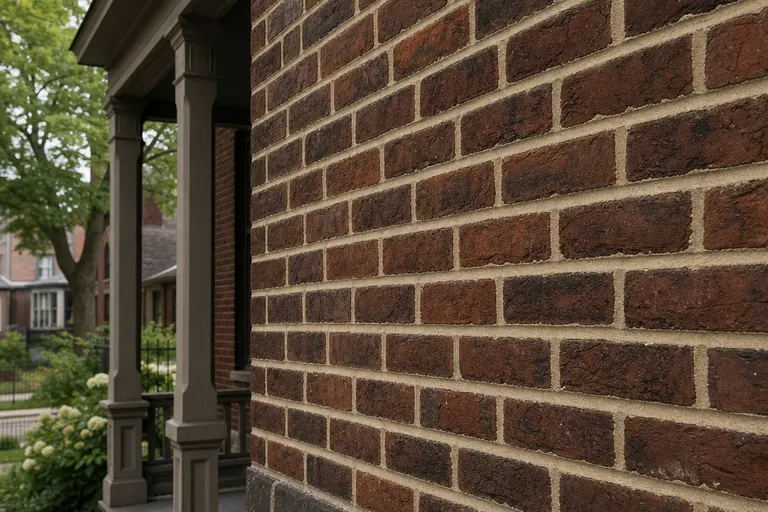
Historic brick wall with repointed light mortar joints tooled to a concave profile, retaining the natural color variation of the aged brick

Well-matched repointing restores a crisp, water-shedding joint profile while the brick keeps its age and character — the joints blend in rather than standing out.

Request Your Free Tuckpointing Estimate

Tell us about your project and we'll schedule a free on-site assessment. No obligation — just honest guidance from local masonry specialists.

Tell Us About Your Project

By submitting this form, you agree to our Terms and Conditions and Privacy Policy.

Frequently Asked Questions

How does tuckpointing protect Grand Rapids brick buildings from Michigan winters?▼

Tuckpointing restores the weathertight seal of the mortar joints — the designed weak point of a brick wall — before freeze-thaw cycles can drive water behind the brick. Grand Rapids sees repeated freeze-thaw episodes every winter, and moisture trapped in deteriorated joints expands as it freezes, widening gaps and eventually damaging the brick itself. Replacing failing mortar with a properly matched mix stops that cycle at its source.

What is the difference between tuckpointing and repointing?▼

In everyday use, tuckpointing and repointing refer to the same process — removing deteriorated mortar from brick joints and replacing it with fresh mortar. Strictly speaking, traditional tuckpointing is a decorative technique using two different colored mortars to create a fine line effect, but in the United States the term is widely used to mean any mortar joint replacement. We provide free estimates that clearly describe the scope of work for your specific situation.

How often does tuckpointing need to be done?▼

Quality tuckpointing with the right mortar mix for the building type typically lasts several decades in Michigan's climate. The exact interval depends on the mortar composition used, exposure conditions, and the original quality of the work. South and west-facing walls generally experience more weather stress and may show wear sooner. A visual inspection every several years helps catch joint deterioration before it progresses to water infiltration.

Does West Michigan's climate affect how quickly mortar deteriorates?▼

Yes, significantly. Grand Rapids experiences more freeze-thaw cycles per year than many other parts of the country — repeated episodes of temperatures dropping below freezing and rising above it throughout winter and early spring. Each cycle stresses mortar joints that have absorbed any moisture. Buildings that have joints facing prevailing wind-driven rain directions, or low spots where water can pool against brick, typically show faster mortar deterioration.

Who does tuckpointing near me in Grand Rapids?▼

Grand Rapids Masonry & Restoration provides tuckpointing throughout Greater Grand Rapids and West Michigan, including East Grand Rapids, Grand Haven, Holland, Spring Lake, Caledonia, Allendale, and Hudsonville. We handle both residential and commercial repointing, match mortar color and joint profile to the existing wall, and provide free on-site estimates so you know the scope before committing.

How much does tuckpointing cost in Grand Rapids?▼

Tuckpointing cost is driven by the area of wall to be repointed, the accessibility of the work (ground level vs. upper stories), and whether the mortar condition is limited to surface deterioration or has progressed to significant voids that require more material and time. We provide free on-site estimates so you know the real scope and cost before any commitment.