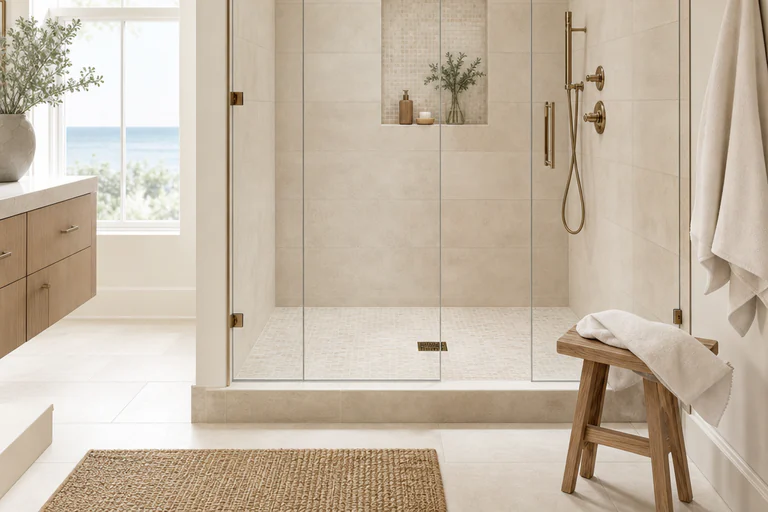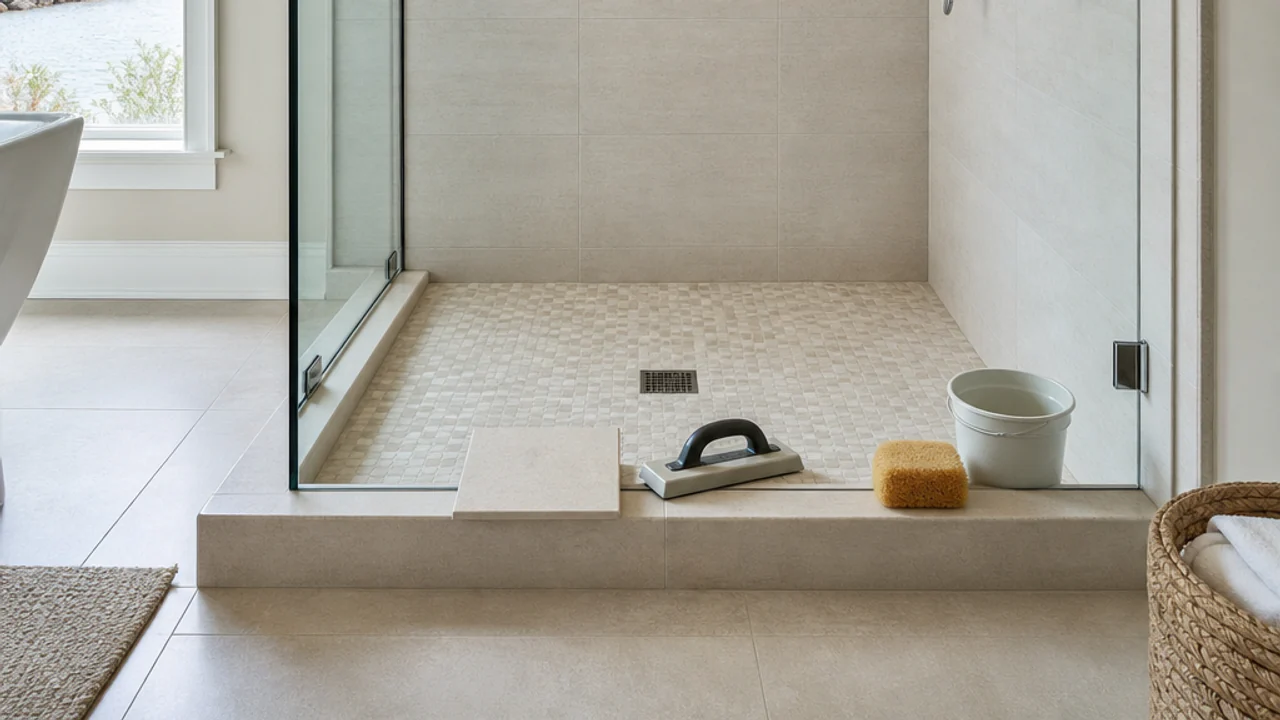

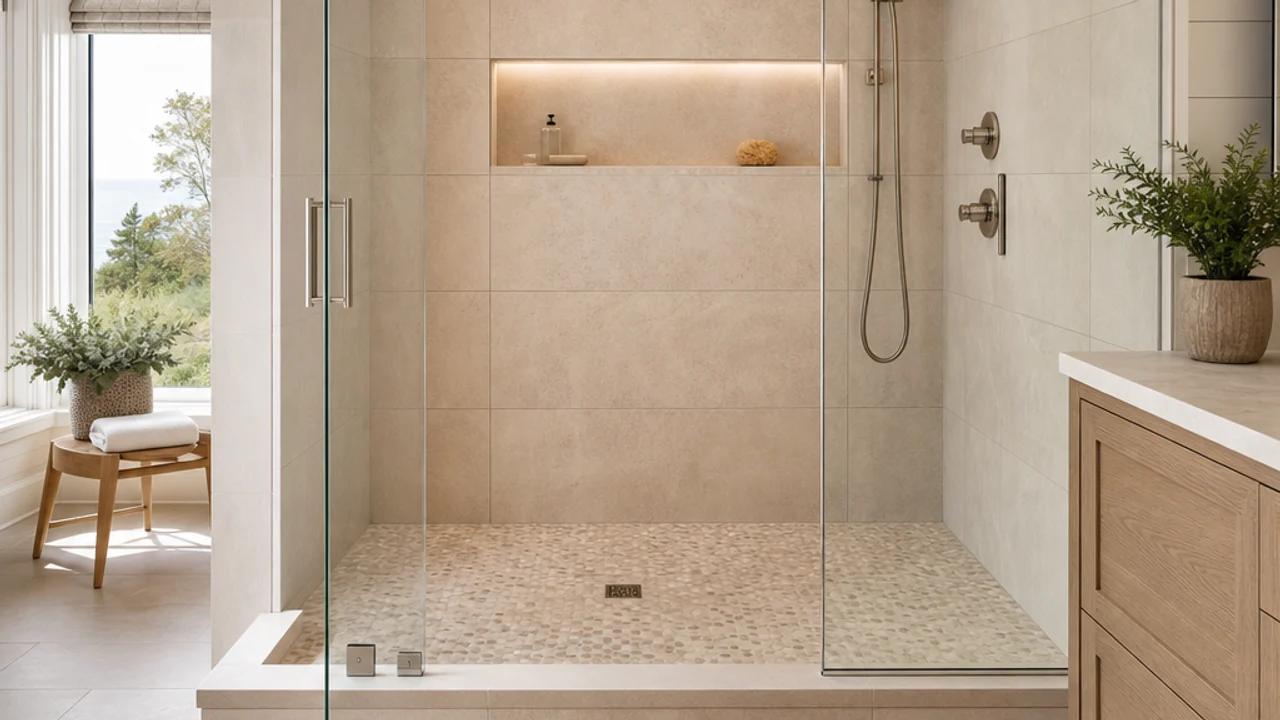
Finished tile shower enclosure with porcelain wall tile, a mosaic sloped floor, a recessed niche, and a glass panel

Shower Tile Installation in Grand Rapids, MI

A tile shower is only as good as the waterproofing behind it. Grand Rapids Masonry & Restoration builds the whole assembly — pan, membrane, and tile — so the part you never see performs as long as the part you do.

✓ Serving Greater Grand Rapids
✓ Free Estimates
✓ Historic Preservation Specialists

Bathroom tile installation needs a clear wet-area plan before the first tile is set. In a shower or tub surround, water that gets past the tile has to be stopped by a continuous waterproofing assembly. We build the waterproofing and tile as one system, and can also include related bathroom floor and wall tile. Because the work is entirely indoors, it can be scheduled through a Michigan winter. For backsplashes, floors, and other indoor tile, see our full tile contractor services hub. Get a free estimate to talk through your project.

Small indoor projects welcome

A practical fit for winter

Contained shower walls, tub surrounds, and related bathroom tile areas are welcome when the waterproofing scope is addressed correctly. Indoor wet-area work can be scheduled in winter.

What Goes Into a Properly Built Tile Shower?

A tile shower is two systems stacked on each other, and only one of them is visible. The tile and grout are the wearing surface and the part you choose for looks. Behind them sits the waterproofing assembly — the pan or sloped base, the membrane over the walls and floor, and the sealed treatment of every corner, curb, penetration, and niche. Tile and grout are not waterproof. Grout in particular absorbs water. The membrane is what keeps water inside the shower, and the tile's job is to protect the membrane and shed the bulk of the water toward the drain.

That distinction explains nearly every shower failure we get called about. When a shower leaks into a ceiling below or rots the framing behind a wall, the tile is usually still attached and the grout usually looks acceptable. What failed was a corner the membrane did not properly wrap, a curb that was never sealed on all three faces, a pan with too little slope to move water to the drain, or a niche cut into a wall after the waterproofing was already done. These are all decisions made during construction, not maintenance failures, and they are invisible once the tile goes on.

Slope is the detail most often shortchanged. A shower floor has to fall consistently toward the drain across its whole area, including under the door and into the corners, or water stands and finds the lowest weakness rather than draining. Getting that fall right while keeping the tile pattern reading straight is the part of a shower floor that takes experience — particularly with larger floor tile, where a flat tile cannot follow a slope in two directions at once and the layout has to account for it. Mosaic and small-format tile handle compound slope far more forgivingly, which is why they remain the common choice for shower floors.

Our masonry background matters more here than it does on a kitchen backsplash. A shower is a wet, enclosed assembly built out of layered materials that all have to work together, and the same reasoning we apply to keeping water out of a brick wall applies to keeping it inside a shower: understand where water wants to go, give it a path, and make sure the barrier is continuous rather than nearly continuous. Our bathroom tile installation scope can also include tub-to-shower conversions, curbless entries where the framing allows, and bathroom floor and wall tile beyond the shower itself. Full bathroom remodeling, plumbing, vanities, and fixture installation remain separate scopes.

One boundary worth stating plainly: we handle the tile and the waterproofing assembly. Moving a drain, relocating supply lines, changing a valve, and any electrical or cabinetry work belong to other trades. On most shower projects that coordination is straightforward, and we confirm during the estimate which parts of the job are ours and which need a plumber or electrician, so the whole project is planned across both scopes rather than stalling between them.
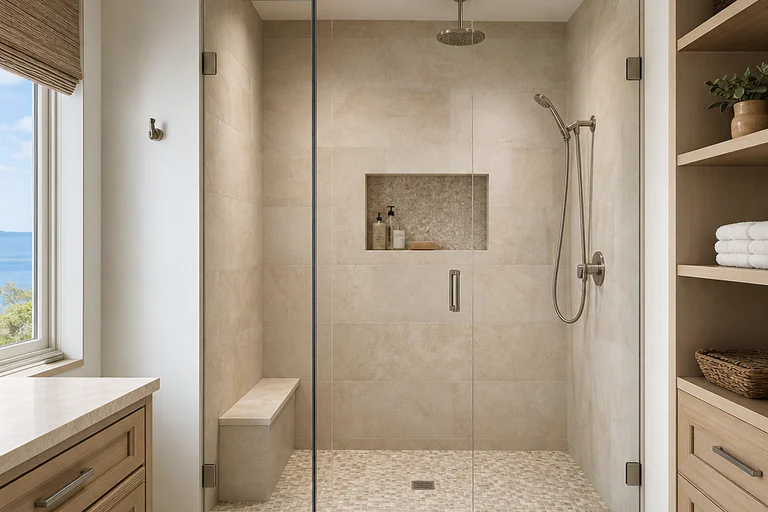
Dated alcove bathtub and small-tile tub surround in an older bathroom

Most shower work starts at an alcove tub and a dated surround, and what sits behind that finish decides whether the job is a conversion or a rebuild.

Shower Problems We Solve

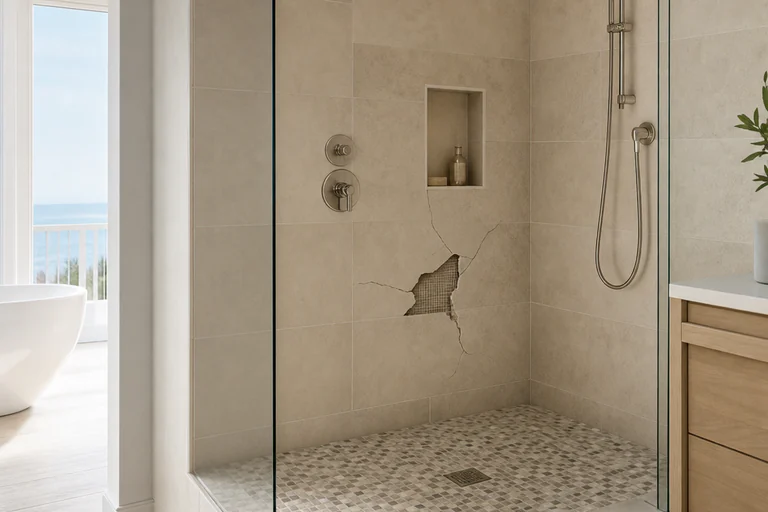
Opened shower wall corner exposing dark water staining and deteriorated substrate behind removed tile

When a shower leaks the tile is usually still attached; what failed is behind it, at a corner the waterproofing never carried through continuously.

  • ✓Showers leaking into the ceiling or wall below — almost always a waterproofing failure at a corner, curb, or penetration rather than a tile problem
  • ✓Standing water on the shower floor — a pan without consistent fall to the drain, so water sits instead of draining
  • ✓Dated tub surrounds that go unused — tub-to-shower conversions in homes where nobody takes baths anymore
  • ✓Failed previous shower installations — tile set over inadequate or missing waterproofing that has to be rebuilt rather than patched
  • ✓Cracked grout and loose tile at corners and change-of-plane joints where rigid grout was used instead of flexible sealant

Our Shower Tile Installation Process

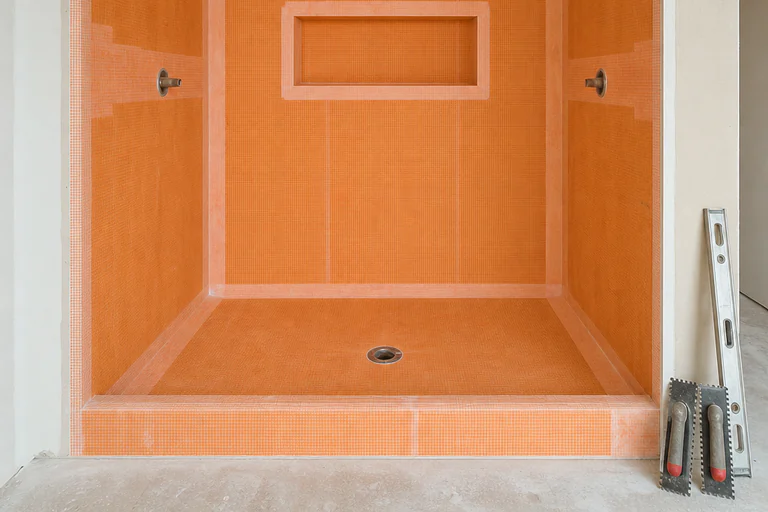
Shower waterproofing stage with a membraned sloped pan, banded corners, a wrapped curb, and trowels staged on a drop cloth

The pan slope and a membrane carried continuously through every corner, curb face, and penetration are settled before a single tile goes on.

1

Assessment & Scope Confirmation

We look at the existing shower or tub area, identify whether there is evidence of past water damage behind the finish, and confirm what the project includes. This is also where we establish which work is ours and which needs a plumber or electrician, so both scopes are planned from the start rather than discovered later.

2

Demolition & Substrate Inspection

The existing tile and backer come out and we inspect what is behind them. This is the point where a project scope can legitimately change, because rotted framing or subfloor damage from a long-running leak is not visible until the wall is open. We show you what we find and explain what it means before continuing.

3

Pan & Slope Construction

The shower base is built to fall consistently toward the drain across the entire floor, including corners and the area under the door. Slope is established in the base rather than corrected with tile thickness, because a pan that does not drain cannot be fixed by the tile above it.

4

Waterproofing the Assembly

Membrane is applied over the floor and walls and carried continuously through every corner, up the curb on all faces, and around every penetration and niche. Corners, seams, and changes of plane get the specific treatment the system calls for, since these are where wet-area assemblies actually fail. Any niche or bench is built and waterproofed as part of this stage, not cut in afterward.

5

Layout & Tile Setting

Layout is planned before the first tile is set so cuts land sensibly at the ceiling, the curb, the niche, and any window or fixture, and so the pattern reads straight on every wall. Tile is set in mortar appropriate for a wet application with full coverage behind it, and floor tile is chosen and laid to follow the pan's slope without lippage.

6

Grouting, Sealing & Cure

Field joints are grouted once the setting mortar has cured. Perimeter joints, inside corners, and changes of plane get flexible sealant rather than rigid grout, because those joints move and grout in them cracks. We finish with the cure and first-use timeline so the assembly is not put into service before it is ready.

Benefits of Professional Shower Tile Installation

✓The waterproofing assembly is built as a continuous system, so the barrier that actually keeps water out of your framing is not left to grout
✓A shower floor with consistent fall to the drain, so water leaves rather than standing in corners
✓Corners, curbs, niches, and benches waterproofed as part of the assembly rather than cut in after the fact
✓Flexible sealant at movement joints instead of rigid grout, which is what stops the cracking that reopens every year
✓Tub-to-shower conversions that turn an unused tub into the shower the household actually wants
✓Entirely indoor work, so it can be scheduled through a Michigan winter instead of waiting for the exterior season
Completed shower enclosure with plumb wall tile, matched cuts flanking a niche, and a mosaic floor draining evenly

A finished shower reads as deliberate: plumb joints, cuts that match on both sides of the niche, and a floor that carries water to the drain from every corner.

Tile Installation by City in West Michigan

We serve homeowners throughout the Grand Rapids metro area and West Michigan. Select your city for local tile installation information.

Request Your Free Shower Tile Installation Estimate

Tell us about your project and we'll schedule a free on-site assessment. No obligation — just honest guidance from local masonry specialists.

Tell Us About Your Project

Tell us about the tile job

Have photos? Mention that in your message. We can arrange a secure way to share them after we respond.

By submitting this form, you agree to our Terms and Conditions and Privacy Policy.

Frequently Asked Questions

What goes into a properly built tile shower?▼

Two systems: the waterproofing assembly and the tile over it. The assembly is the sloped pan, the membrane across the floor and walls, and the sealed treatment of every corner, curb, penetration, and niche — this is what actually keeps water out of your framing. The tile and grout are the wearing surface that protects the membrane and sheds water to the drain. Tile and grout are not waterproof; grout absorbs water. Nearly every shower failure traces back to the assembly behind the tile rather than the tile itself.

Who installs shower tile near me in Grand Rapids?▼

Grand Rapids Masonry & Restoration installs shower tile throughout Greater Grand Rapids and West Michigan, including East Grand Rapids, Grand Haven, Holland, Spring Lake, Caledonia, Allendale, and Hudsonville. We build the full assembly — pan, waterproofing membrane, and tile — and also handle tub-to-shower conversions and bathroom floor and wall tile. Estimates are free, and we confirm at the estimate which parts of the project are ours and which need a plumber.

Who are shower tile installers near me in Grand Rapids?▼

Grand Rapids Masonry & Restoration installs waterproofed tile showers throughout Greater Grand Rapids and West Michigan. We build the pan, membrane, and tile as one assembly — not tile set over unverified waterproofing — and also handle tub-to-shower conversions and related bathroom floor and wall tile. Estimates are free.

Who are the bathroom tile installers near me in Grand Rapids?▼

Grand Rapids Masonry & Restoration provides bathroom tile installation throughout Greater Grand Rapids and West Michigan. We install waterproofed tile showers, shower walls and floors, tub surrounds, and related bathroom floor and wall tile. We do not present this as full bathroom remodeling: plumbing, electrical work, vanities, and fixtures are coordinated as separate scopes when needed.

Do you install the waterproofing or just the tile?▼

Both, and we would decline a job that asked us to tile over someone else's unverified waterproofing. The membrane and the tile are one system — if the barrier behind the tile is not continuous through every corner and penetration, the tile above it cannot compensate. We build the pan, apply and detail the membrane, and set the tile as a single scope so responsibility for the assembly is not split.

How long does a tile shower installation take?▼

Most shower installations run a week or more from demolition to first use, and the schedule is driven by cure times rather than labor hours. Demolition and substrate inspection come first, then pan and waterproofing, then setting, then grouting — with required cure windows between several of those stages. Discovering water damage behind the old shower extends it, which is why we inspect before quoting a firm timeline. We give you a realistic schedule at the estimate and flag what could change it.

Can a bathtub be converted to a tile shower?▼

Usually yes, and it is one of the most common requests we get in homes where nobody uses the tub. The conversion involves removing the tub, adapting the drain and valve — plumber scope — and then building a shower base, waterproofing the enclosure, and tiling it. The main variables are the existing alcove dimensions, whether the drain can be relocated reasonably, and whether you want a curb or a curbless entry, which depends on the floor framing. We assess all of that during the estimate.

Why do tile showers leak even when the tile looks fine?▼

Because the tile was never what was holding water back. A shower leaks when the waterproofing behind it is discontinuous — a corner the membrane did not wrap, a curb sealed on the top but not the sides, a pan without enough slope, or a niche cut in after the membrane went on. In most leaking showers we open up, the tile is still bonded and the grout looks acceptable. That is exactly why a leak is a rebuild question rather than a regrouting question.

Can shower tile be installed during a Michigan winter?▼

Yes. A shower is entirely interior work in a heated house, so outdoor temperatures do not affect it. Winter is often the practical time to schedule it because crews have more availability before spring exterior masonry demand picks up. The one planning consideration is that the shower is out of service through the work and the cure period, so if it is the only shower in the house we schedule around that.

What tile works best in a shower?▼

Porcelain is the usual choice for shower walls and floors because it is dense and absorbs very little water. Ceramic works well on walls. Natural stone is used in showers but is porous and needs sealing and more maintenance. The bigger decision is tile size on the shower floor: a large flat tile cannot follow a slope falling in two directions, so mosaic and small-format tile handle a sloped pan far better. We talk through the tradeoffs against your specific layout during planning.

Shower Tile Installation Service Areas

Serving West Michigan communities with expert shower tile installation services