

How Do You Remove Old Floor Tile?
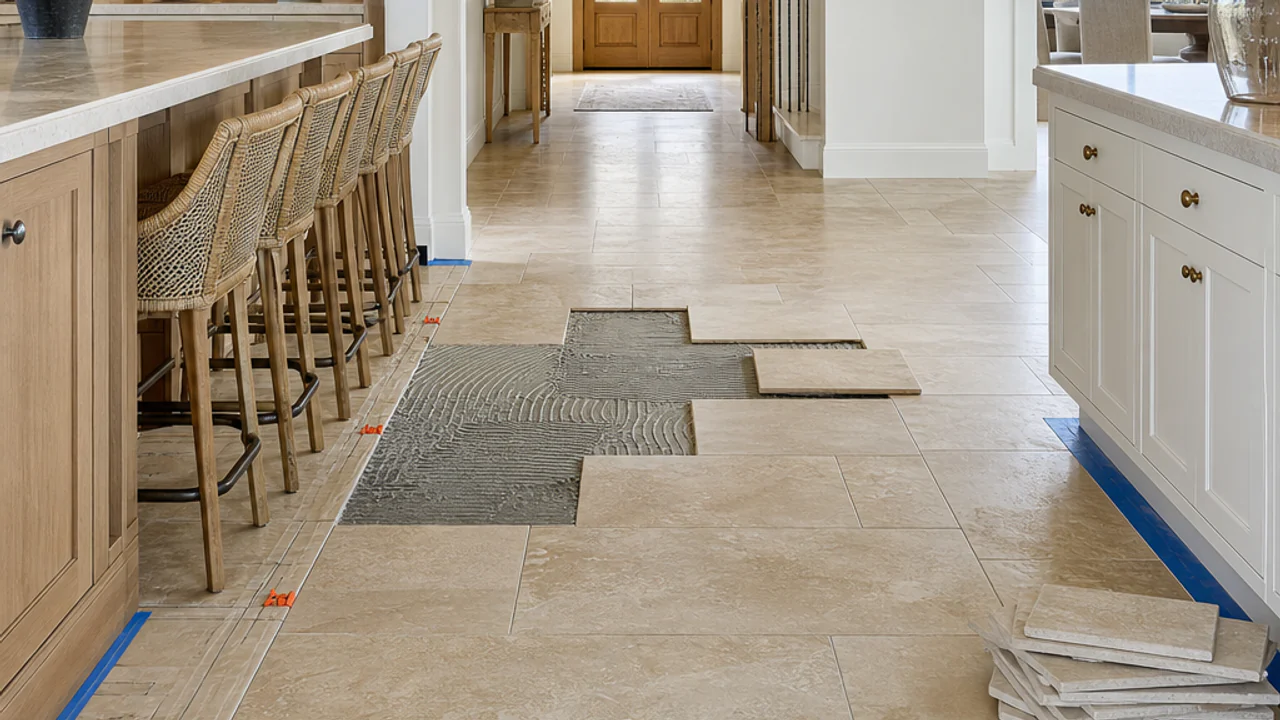
Old floor tile is removed by breaking it loose one piece at a time, usually starting at a cracked tile or an edge, prying or chiseling each tile up, and then scraping off the mortar left behind so the floor underneath is clean and flat. It is simple work in principle, but it is slow, loud, dusty, and hard on the body, and the floor under the tile often needs repair once it is exposed. Before starting, check whether the old flooring could contain asbestos and plan for dust control.
What are the steps to remove floor tile?
Clear the room, remove baseboards and anything fixed to the floor, and close off doorways and vents to contain dust. Start where a tile is already cracked or loose, or break one tile in the middle to get an edge to work from. Drive a chisel or floor scraper under each tile at a low angle and pry it up. Once the tile is off, scrape or grind away the leftover mortar until the subfloor is clean and flat, then check it for damage before anything new goes down.
How hard this is depends on how the tile was set. Tile set in a thin layer of mortar over plywood or cement board usually comes up piece by piece. Many older homes have tile set in a thick mortar bed, and that whole bed has to be broken out, which is much heavier work.
What safety checks should you make first?
Two. First, older vinyl floor tiles, especially 9-inch squares, and the black adhesive under some older floors can contain asbestos. If there is any chance of that, have a sample tested before breaking anything up. Second, breaking and grinding ceramic tile and mortar releases fine silica dust. Keep the work area sealed off, mist the debris to keep dust down, and wear eye protection, gloves, and a respirator rated for fine dust.
What do you find under old tile?
Often a subfloor that needs attention. Bathroom floors in particular can hide water damage around the toilet and tub. Look for soft or stained spots, loose or squeaky boards, and areas that are not flat. A new tile floor needs a base that is stiff and flat enough for the tile you choose, so any damage found here should be fixed before new tile is set. See what is the best tile for a bathroom or kitchen floor for how tile size changes what the floor needs.
How much does tile removal cost?
National cost guides put professional tile removal at about $5 per square foot (Angi), with disposal of the debris often a separate line. Removing a thick mortar bed or repairing a damaged subfloor costs more. When removal is part of a full replacement, it is usually priced together with the new floor. See the tile section of our cost guide for more ranges.
When should you hire someone to remove tile?
It makes sense to hire it out when the area is large, when the tile is set in a mortar bed, when there is any chance of asbestos, or when you are replacing the floor anyway. A contractor who removes the old tile and sets the new one can deal with whatever turns up underneath as part of the same job, instead of you finding a problem halfway through. Our tile removal and replacement service includes the tear-out, hauling the debris away, repairing the floor underneath, and setting the new tile. Contact us for a free estimate.
Frequently Asked Questions
Is it hard to remove floor tile?
It is not complicated, but it is hard work. Tile set in a thin layer of mortar usually comes up piece by piece with a chisel or floor scraper. Tile set in a thick mortar bed, common in older homes, is much heavier to remove because the whole bed has to come out.
Can old floor tile contain asbestos?
Some older flooring can. Older vinyl floor tiles, especially 9-inch squares, and the black adhesive under some older floors are the usual concern. If there is any chance of asbestos, have a sample tested before breaking anything up.
Can you remove tile without damaging the subfloor?
Often, with care, when the tile was set over plywood or cement board. Some damage is common, and older or water-damaged subfloors may need repair either way. The subfloor should be checked once the tile is off and fixed before new tile goes down.
How much does it cost to have tile removed?
National cost guides put tile removal at about $5 per square foot, with disposal sometimes extra. Thick mortar beds and subfloor repairs cost more. When removal is part of a full replacement, it is usually priced together with the new floor.
Need Professional Help?
If you've identified masonry issues or need a professional inspection, Grand Rapids Masonry & Restoration is here to help. We serve the Grand Rapids metro area and surrounding communities.
Related Articles
When Should You Replace Tile Instead of Repairing It?
Tile repair fixes a surface that stays in place. Tile replacement tears the old surface out, hauls debris away, corrects the substrate, and sets new tile. Here is how to tell which one your Grand Rapids project actually needs.

How Much Does Tile Floor Installation Cost?
National cost guides put a complete tile floor at roughly $15 to $75 per square foot, and our own approximate range is $20 to $60 installed. Here is what goes into the price, what pushes it higher, and how to compare estimates.
What Is the Best Tile for a Bathroom or Kitchen Floor?
Porcelain, ceramic, or natural stone? Here is how to choose floor tile for a bathroom or kitchen, which finishes are safer when wet, and why tile size changes what the floor underneath needs.
Tile Services in Greater Grand Rapids
Grand Rapids Masonry & Restoration handles indoor tile work year-round — showers, floors, backsplashes, repair, and replacement across the Grand Rapids metro.
View all tile contractor services →