

How Can You Tell If Tile Was Installed Badly?
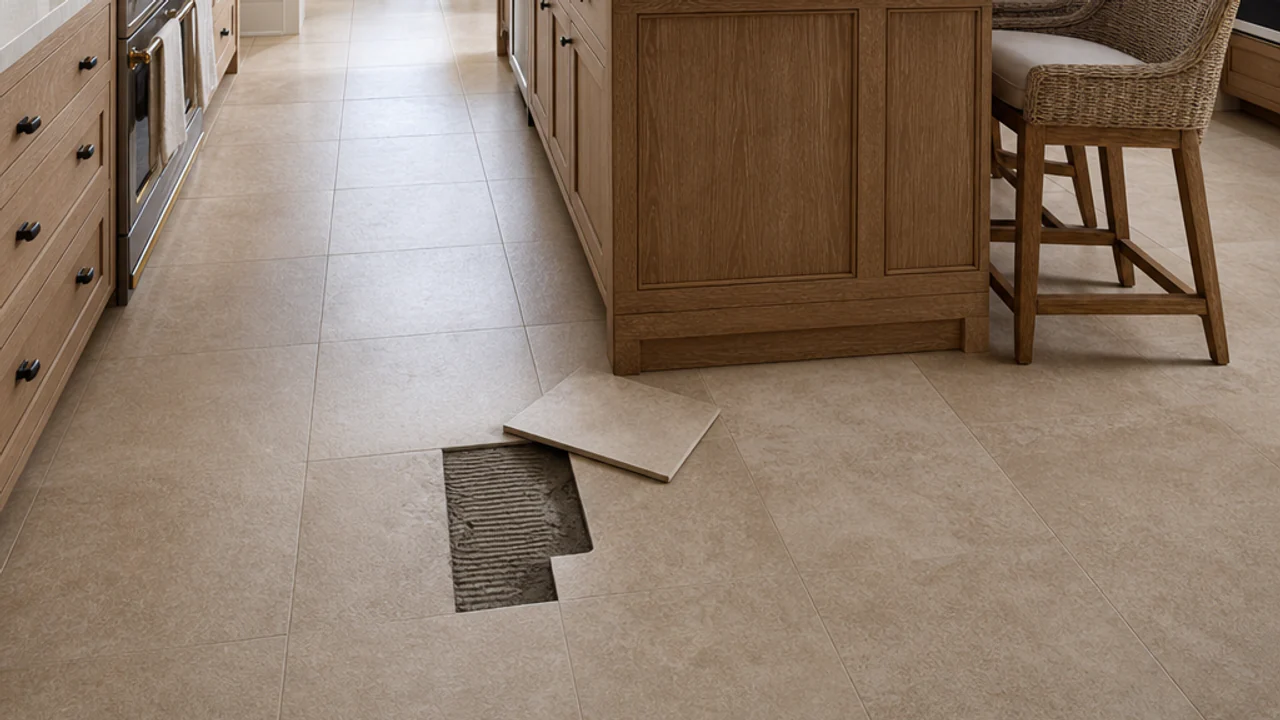
The most common signs of a bad tile job are tile edges that sit at different heights, tiles that sound hollow when tapped, grout or tiles that crack within months, grout lines that wander or change width, and thin slivers of tile at the edges of the room. In showers, grout that stays dark long after use, or a stain on the ceiling below, can mean the waterproofing behind the tile has failed. Most of these problems start underneath the tile, not with the tile itself.
What does a bad tile job look like?
Run your hand or a sock-covered foot across the floor. If you can feel edges catching, neighboring tiles are set at different heights, which is called lippage. Look along the grout lines from a low angle: they should run straight and stay a consistent width. Check the edges of the room for thin slivers of cut tile, which point to poor layout planning. Look at the corners and where the floor meets the walls, tub, and cabinets. Those joints need room to move and are usually finished with a flexible sealant rather than grout, so grout cracking along every edge is a common sign that was skipped.
What are the hidden signs of a bad tile job?
Tap tiles with the handle of a screwdriver. A solid tile sounds sharp; a tile that has not bonded to the floor underneath sounds hollow. A floor that flexes or creaks underfoot, or tiles that rock or click when you step on them, point to a problem below the tile. In a shower, grout that stays dark long after the shower is used, a musty smell, peeling paint or stains on the ceiling below, or flooring next to the shower that has lifted are all signs that water is getting where it should not. See why the grout is cracking in a tile floor for more on reading these signs.
What causes most bad tile jobs?
Most failures come from steps that are hidden once the tile is down. The floor or wall underneath was not flat or stiff enough for the tile chosen. The tile was not fully bedded in mortar, leaving empty spots underneath. No room was left for the floor to expand and shrink at its edges. In showers, the waterproofing behind the tile was missing, incomplete, or not tested before tiling. Rushing the job so mortar and grout do not have time to cure can cause problems too. None of these are visible on the day the job is finished, which is why a new tile floor can look perfect and start failing months later.
Can a bad tile job be fixed, or does it need to be redone?
It depends on how widespread the problem is. A few cracked tiles, some hollow tiles in one area, or cracked grout along the edges can often be repaired by replacing the affected tiles, regrouting, and sealing the edges with a flexible sealant. See tile repair. When hollow tiles, cracking, or movement run across the whole floor, or a shower is leaking behind the tile, the problem is underneath, and the lasting fix is usually to take the tile up, correct the floor or waterproofing, and install it again. See tile replacement and when to replace tile instead of repairing it.
How do you avoid a bad tile job?
Ask a few questions before you hire anyone. How will you check and prepare the floor or wall before tiling? For a shower, what waterproofing goes behind the tile, and how will you test it before the tile goes on? How do you handle the edges and corners where the tile meets walls, tubs, and cabinets? Can I see photos of finished floors and showers, not just backsplashes? Will the written estimate spell out the preparation, the tile and grout, cleanup, and the schedule? Are you insured, and what happens if something fails after the job? A contractor who answers these clearly is far more likely to leave you with tile that lasts.
For new work, see tile floor installation and shower tile installation. For tile that is already failing, see tile repair, shower tile repair, or contact us for a free assessment. Tile work is indoors, so it can be scheduled through a Michigan winter.
Frequently Asked Questions
How can you tell if tile was installed correctly?
Correctly installed tile sits flat with no edges catching underfoot, sounds solid when tapped, and has straight grout lines of an even width. The edges where tile meets walls and fixtures are finished cleanly, and in a shower the grout dries out after use. Hollow-sounding tiles, uneven edges, and cracking within months are signs something went wrong.
Why does my new tile sound hollow?
A hollow sound usually means the tile is not fully bonded to the mortar or floor underneath, often because the mortar did not cover the whole back of the tile or the floor was not flat. A few hollow tiles may stay put, but hollow tiles across an area tend to crack or come loose over time.
Should grout crack in a new tile floor?
No. Grout cracking within the first months usually points to movement: a floor that flexes, tiles that are not fully bonded, or edges that were grouted where a flexible sealant belongs. Regrouting alone will not last until the cause is fixed.
Can someone fix a bad tile job done by another installer?
Yes. A tile contractor can assess what went wrong and recommend either a targeted repair, such as replacing hollow or cracked tiles and regrouting, or a full redo when the problem is underneath the whole floor or behind a shower. The first step is finding the cause, so the same failure does not come back.
Need Professional Help?
If you've identified masonry issues or need a professional inspection, Grand Rapids Masonry & Restoration is here to help. We serve the Grand Rapids metro area and surrounding communities.
Related Articles
Why Is the Grout Cracking in My Tile Floor?
Cracked grout is usually a sign, not the problem. Here is what makes grout crack, when regrouting a tile floor is worth it, and when the real fix is underneath the tile.

How Much Does Tile Floor Installation Cost?
National cost guides put a complete tile floor at roughly $15 to $75 per square foot, and our own approximate range is $20 to $60 installed. Here is what goes into the price, what pushes it higher, and how to compare estimates.

Who Installs Shower Tile in Grand Rapids?
Shower tile installation is handled by tile contractors who build the waterproofing assembly behind the tile — not just set finish tile. Here is who to hire in Grand Rapids and what the scope includes.
Tile Services in Greater Grand Rapids
Grand Rapids Masonry & Restoration handles indoor tile work year-round — showers, floors, backsplashes, repair, and replacement across the Grand Rapids metro.
View all tile contractor services →