

When Do Block Foundation Mortar Joints Need Repointing?
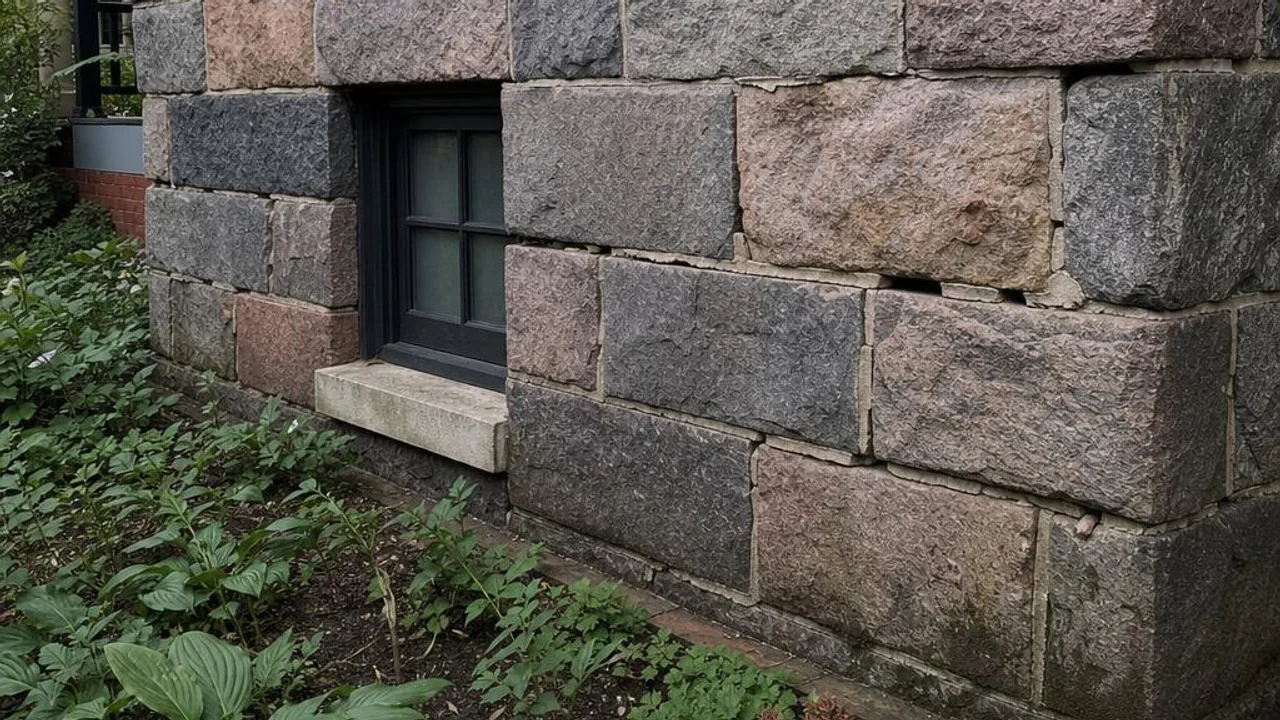
Block foundation mortar joints fail the same way brick joints do — water enters, freeze-thaw cycles open the joint further, and powdery mortar falls out at grade. In Michigan, the lower courses and corners of a block foundation often show the worst erosion because splash from roofs, downspouts, and walks keeps those joints wet going into winter.
How do I know if my block foundation mortar is failing?
Probe the joints with a screwdriver or key: mortar that crumbles easily, gaps you can see between blocks, and white efflorescence streaking down the wall are common signs. Horizontal mortar loss at the bottom few courses — where snow melt and splash concentrate — is especially typical on West Michigan homes.
Hairline shrinkage cracks in individual blocks are different from open joints. Joint failure means water has a path into the wall assembly; that is what repointing addresses. If blocks themselves are cracked through or the wall is bowing inward, joint work alone is not enough — the wall needs structural assessment first.
What happens if I ignore crumbling block mortar?
Open joints admit water that freezes inside the wall each winter. Over several seasons, blocks can spall at the face, horizontal cracking can develop, and interior moisture or musty basement conditions follow. What started as repointing at the base of the wall can become partial block replacement or stabilization work if joints stay open through multiple freeze cycles.
Efflorescence alone does not always mean emergency — but powdery mortar falling out at grade almost always does. Catching joint failure before blocks begin to break apart keeps repair scope smaller and less disruptive.
Can block foundations be repointed like brick walls?
Yes, when the wall is otherwise stable. The process is similar: remove deteriorated mortar to a proper depth, clean the joint, and pack compatible mortar matched to the block and exposure. Block foundations from mid-century construction often used Portland-based mortar; older brick-and-block combinations may need softer mixes where they meet historic brick.
Repointing at grade should include reviewing drainage — downspout discharge, soil slope, and whether splash from walks keeps the base wet. Joint work without addressing chronic wetting at the bottom of the wall shortens the repair life.
Block foundation repointing vs. foundation crack repair
Repointing fixes open mortar joints and restores weathertightness at the block courses. Crack repair addresses movement or structural cracks through blocks or across the wall plane. Stable stair-step cracking along joints may be repointing scope; widening horizontal cracks, bowing, or cracks through block units need diagnosis before cosmetic joint fill.
Our foundation cracks guide covers how to read crack patterns on older masonry foundations. Repointing and crack assessment often go together on the same visit.
See foundation repair and foundation restoration, or contact us for a free assessment.
Frequently Asked Questions
How often should block foundation mortar be repointed?
There is no fixed schedule — joint life depends on exposure, original mortar, and how wet the base of the wall stays. Inspect joints after winter; repoint when mortar erodes enough to admit water, not after blocks begin to spall.
Can I repoint a block foundation myself?
Small touch-ups are possible, but matching mortar strength, achieving proper joint depth, and diagnosing whether the wall is stable take experience. Hard mortar packed into soft, failing joints can trap moisture and worsen block face damage over time.
Does painting block foundation walls replace repointing?
No. Paint or waterproof coatings over open joints hide the problem temporarily while water continues entering through gaps. Sound repointing comes first; breathable coatings may supplement after joints are restored, depending on exposure.
Is block foundation repointing a winter project?
Exterior repointing needs workable temperatures and dry conditions so mortar cures correctly. Assessment and planning can happen in winter; most exterior joint work in West Michigan is scheduled for warmer, drier months.
Need Professional Help?
If you've identified masonry issues or need a professional inspection, Grand Rapids Masonry & Restoration is here to help. We serve the Grand Rapids metro area and surrounding communities.
Related Articles
What Do Foundation Cracks Mean in Older Grand Rapids Homes?
Foundation cracks in older Grand Rapids homes range from harmless shrinkage lines to signs of movement that need masonry assessment. Here is how to tell what you are seeing.
What Is the Difference Between Foundation Repair and Restoration?
Foundation repair fixes specific cracks and failures; restoration addresses widespread mortar loss and aging masonry foundations systematically. Here is how to tell which your home needs.
Who Installs Tile in East Grand Rapids?
Tile in East Grand Rapids is installed by tile contractors who handle shower waterproofing, kitchen backsplashes, mudroom floors, and fireplace hearths — not handymen or big-box add-on crews alone. Here is who to hire and what to expect.
Masonry Services Across West Michigan
Grand Rapids Masonry & Restoration serves homeowners throughout the Grand Rapids metro and West Michigan lakeshore.
View all service areas →